
Cyrtorchis arcuata
Cyrtorchis arcuata
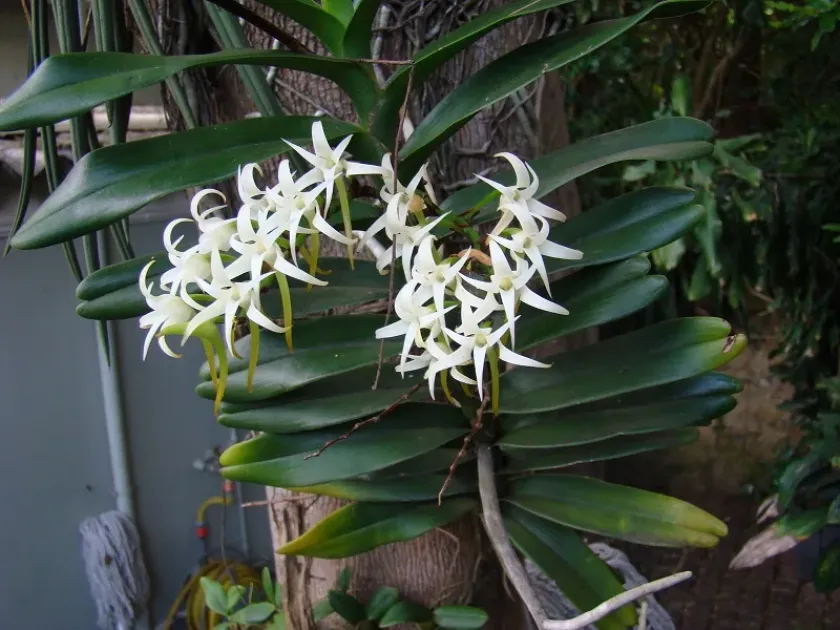
Description
Growing requirements
Cyrtorchis arcuata is an epiphytic orchid species belonging to the Orchidaceae family. Naturally found in the tropical forests of Africa, it grows on tree trunks where it receives abundant moisture and filtered sunlight.
Botanically, it features a monopodial growth habit with leathery, distichous leaves. Its root system is highly adapted to tropical conditions, capable of absorbing nutrients and humidity directly from the surrounding environment.
Cultivation requires a stable environment with high humidity levels, ideally ranging between 60% and 80%. Temperature stability is crucial, mimicking the tropical climate with daytime highs of 22–26°C and cooler nights.
The potting medium must be extremely well-draining, such as coarse bark chunks or mounted on cork plaques. Proper aeration of the root zone is the most important factor in preventing root system decline.
Light requirements involve bright, diffused sunlight. Direct exposure to the midday sun can lead to leaf scorching, while shade-grown plants may fail to produce their characteristic fragrant flowers.
Main diseases and pests
Fungal pathogens represent the most significant threat to this species, particularly when stagnant air and overwatering create a breeding ground for root and crown rot infections.
Pests such as scale insects and mealybugs frequently target the leaf axils and the undersides of the leaves. These pests weaken the plant and can facilitate the transmission of viral diseases.
Regular maintenance of humidity and air circulation is the best preventative strategy. Utilizing oscillating fans in indoor settings ensures that moisture does not remain trapped on the foliage for extended periods.
For chemical control, specialized horticultural soaps or systemic insecticides are recommended when biological methods fail. Always ensure that the treatment is suitable for delicate orchid tissue.
Monitoring the pH and salt concentration of the irrigation water is also vital, as epiphytes are sensitive to mineral accumulation, which can damage their specialized root tissues over time.