
Cyrtorchis aschersonii
Cyrtorchis aschersonii
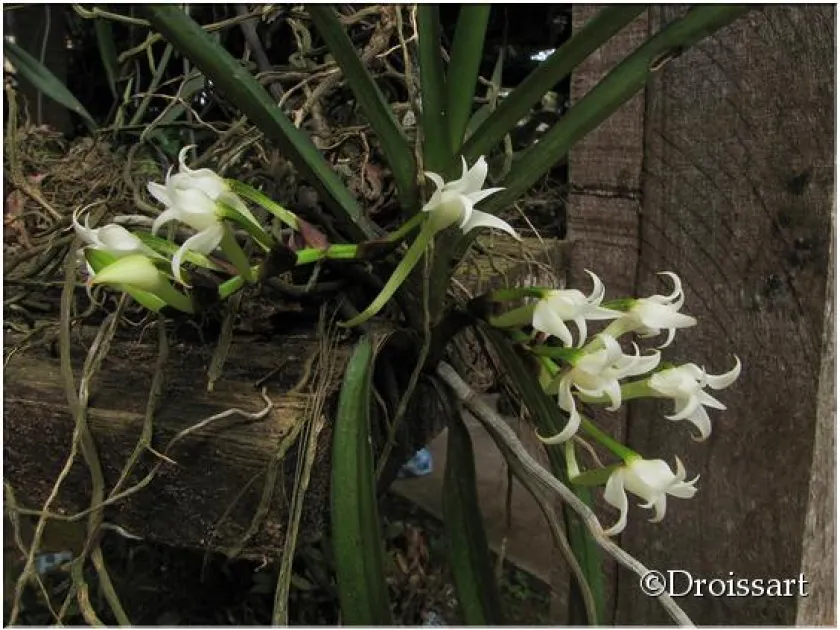
Description
Growing requirements
Cyrtorchis aschersonii is a distinguished member of the Orchidaceae family, native to the tropical regions of Africa. As an epiphyte, this plant primarily grows on tree trunks and branches in high-humidity forests, where it thrives in shaded and humid environments.
Optimal cultivation requires a stable, warm climate with temperatures generally ranging between 22 and 27 degrees Celsius. Maintaining consistent conditions is essential for the plant's metabolic activity, as it lacks a dormant season in its native equatorial habitat.
The root system of Cyrtorchis aschersonii is specialized, featuring velamen, a spongy tissue that captures water and nutrients from the air. In a horticultural setting, it must be grown in specialized media, such as coarse bark or mounted on cork slabs to ensure maximum aeration.
High relative humidity is crucial for the survival of this species. Growers should aim for humidity levels of 70% or higher, often utilizing humidifiers or frequent misting with demineralized or rainwater to mimic natural tropical conditions.
Light requirements for this orchid include bright, indirect sunlight. Exposure to direct afternoon sun can damage the foliage, leading to dehydration and leaf burns. Proper placement near a window with a sheer curtain or under artificial LED grow lights is highly recommended.
Main diseases and pests
The primary threat to Cyrtorchis aschersonii in cultivation is the development of root rot and bacterial infections, which typically occur when the plant is kept in stagnant, overly wet conditions or poor-quality, decomposing substrate.
Insect pests such as spider mites, mealybugs, and scale insects frequently target this orchid. These pests suck the sap from the leaves, causing the plant to weaken and become more susceptible to viral infections or fungal pathogens.
Regular maintenance and sanitation are the best defenses. Removing debris from the growing area, ensuring good airflow, and frequently checking the undersides of leaves can prevent the buildup of pest populations before they cause significant damage.
When chemical treatment is necessary, it is vital to select products specifically labeled for use on orchids, as some broad-spectrum insecticides may be phytotoxic to the delicate tissues of epiphytic plants.
Additionally, keeping the plant healthy through balanced nutrition and proper hydration strengthens its natural resistance to environmental stressors and pathogens, ensuring long-term vitality in an indoor or greenhouse setting.