
Curculigo latifolia
Curculigo latifolia
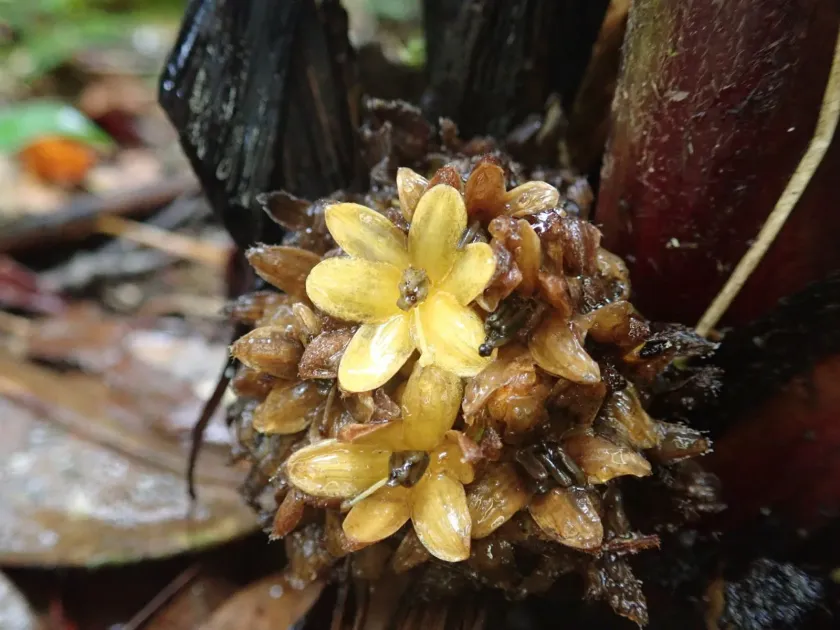
Description
Sowing dates
Curculigo latifolia is a perennial herbaceous plant belonging to the Hypoxidaceae family. In its natural habitat, it reproduces primarily through seeds, which require high humidity levels to germinate successfully.
For agricultural cultivation, seeds require pre-treatment and stratification to break dormancy. Sowing should be done in a light, organic-rich substrate that maintains consistent moisture.
The optimal germination temperature ranges between 25 and 28 degrees Celsius. Providing a stable, warm, and humid environment is essential for high seedling emergence rates.
In commercial operations, vegetative propagation via rhizome division is preferred over seed sowing. This method ensures faster establishment and maintains the genetic integrity of high-yield varieties.
Seedlings need partial shade to prevent leaf scorching during their early growth stages. Gradual exposure to increased light levels is recommended as the plant matures.
Growing requirements
Native to the moist tropical forests of Southeast Asia, this crop thrives in high atmospheric humidity. It is strictly intolerant to dry conditions and prolonged water stress.
The ideal soil is fertile, well-draining, and slightly acidic. Proper drainage is crucial, as waterlogged conditions often lead to rapid rhizome rot and crop failure.
The plant requires temperatures between 20 and 30 degrees Celsius for optimal physiological activity. It is highly sensitive to cold and cannot survive frost, requiring tropical or protected greenhouse conditions.
Regular irrigation is vital in regions with distinct dry seasons. During the active growing period, balanced fertilization helps promote robust vegetative development.
Agroforestry systems are often ideal, as the canopy of surrounding trees provides the natural dappled light required for the plant's health.
Yield
The primary agricultural value lies in the fruits, which contain the heat-stable protein curculin. This substance acts as an intense natural sweetener and flavor modifier.
Yield depends heavily on plantation density and light management. Plants typically begin to produce a harvestable quantity of fruit within two to three years of planting.
Rhizomes are also harvested for use in traditional medicine, where they are valued as tonics. Large-scale harvesting of rhizomes is usually performed after five years of plant maturity.
Productivity is highest in environments that mimic natural forest conditions. Implementing intensive management practices can significantly improve total yields per hectare.
- Sweet fruits containing high concentrations of curculin.
- Medicinal rhizomes used in the production of herbal supplements.
Main diseases and pests
Fungal diseases are the most significant threat to Curculigo latifolia, particularly in environments with poor air circulation and excessive soil moisture.
Root rot caused by Fusarium and Phytophthora species is a major concern. Effective disease management requires soil sterilization and strict control over irrigation schedules.
Spider mites can become a problem in greenhouse settings when humidity drops below optimal levels. Frequent inspection of foliage is necessary to detect early infestations.
Slugs and leaf-eating insects pose a risk to young plants. Integrated pest management using biological control agents is recommended to maintain crop health.
Regular monitoring of leaf surfaces for spots or discoloration allows for early intervention, preventing the spread of diseases across the plantation.
Harvesting
Fruits are harvested by hand as they reach peak ripeness, indicated by their bright red or orange color. Careful handling is required to avoid bruising the delicate skin.
Post-harvest management is critical; fruits must be processed or refrigerated immediately to maintain the stability and activity of the curculin protein.
Rhizomes are excavated after the active growth season, cleaned of debris, and dried in shaded, ventilated areas to preserve active bioactive compounds.
Processed rhizomes can be ground into powder or stored in airtight packaging to maintain quality for long-term supply chains and pharmaceutical manufacturing.
Harvesting is a labor-intensive process requiring skilled workers to ensure that the delicate plant structures remain intact for future growth cycles.