
Palm grass
Curculigo capitulata
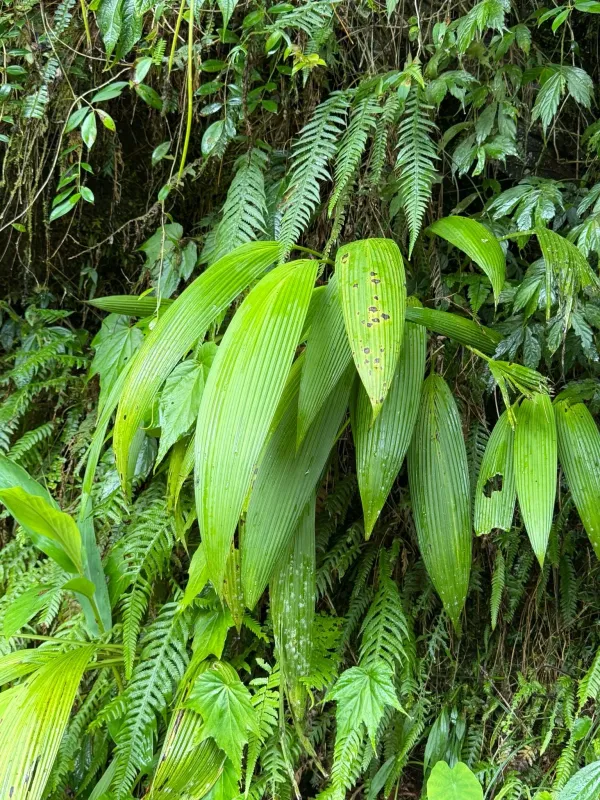
Description
Growing requirements
Palm grass (Curculigo capitulata) is a perennial herbaceous plant belonging to the Hypoxidaceae family. It is widely recognized for its large, plicate, palm-like leaves that create an architectural presence in tropical landscapes or indoor collections.
The plant originates from the tropical regions of Asia and Australia. It is naturally adapted to the forest floor understory, which dictates its preference for filtered light and protection from harsh, direct solar radiation.
Optimal growth is achieved in temperatures ranging from 18 °C to 25 °C. As a tropical species, it requires high ambient humidity to keep its foliage healthy and free from browning, making it suitable for greenhouses or humid indoor environments.
The ideal soil profile should be rich in organic matter and possess excellent drainage capabilities. A mixture containing peat, pine bark, and perlite provides the aeration necessary for the robust rhizome system to thrive without suffocation.
Watering management is crucial for this species. During the growing season, keep the soil consistently moist but never waterlogged. During the dormant winter phase, watering should be reduced to prevent the rhizomes from rotting in cold, damp soil.
Main diseases and pests
The most common pests affecting the plant are spider mites and scale insects, particularly when grown in conditions with poor airflow and low humidity levels.
Root rot remains the most significant physiological threat, typically induced by improper drainage or the use of heavy, water-retaining potting media that deprives roots of oxygen.
Leaf spot diseases may occur if the foliage is kept wet for extended periods in environments with low light and stagnant air conditions.
Effective pest management involves regular cleaning of leaves and the application of horticultural oils or systemic insecticides if infestations are detected early.
To ensure plant health, it is essential to monitor soil moisture levels closely, especially when ambient temperatures decrease, as this reduces the plant's metabolic water consumption.