
Cryptanthus
Cryptanthus hybrids
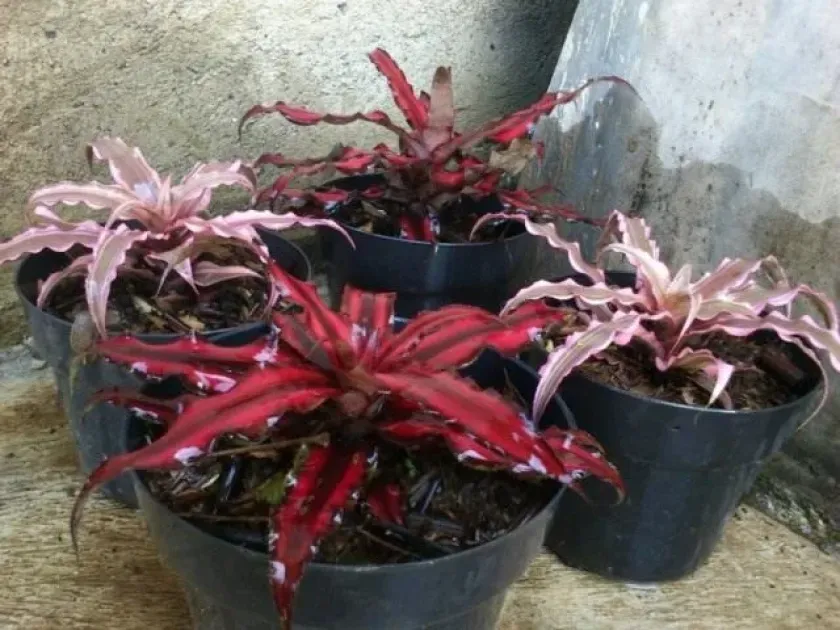
Description
Growing requirements
Cryptanthus hybrids belong to the Bromeliaceae family and are distinguished by their terrestrial growth habit. Unlike many other bromeliads, they do not grow on trees but thrive in forest floor environments, making them a unique subject for greenhouse and nursery production.
Originating from the tropical rainforests of Brazil, these plants require high humidity and moderate light levels. Commercially, they are grown for their attractive, star-shaped foliage, which displays a wide range of colors, from variegated patterns to deep bronze and crimson.
The climate requirements for optimal development include a temperature range of 22–26°C. Consistent warmth is essential, as the plant is sensitive to cold shock and drafts, which can immediately cause physiological stress and stunted growth patterns.
Soil management for Cryptanthus requires a specialized, well-draining potting medium. A mixture of peat moss, pine bark, perlite, and coarse sand provides the necessary aeration for root health while maintaining sufficient moisture retention for the plant's shallow root system.
Irrigation must be precise, focusing on keeping the substrate slightly moist rather than saturated. Overhead watering should be managed carefully to ensure the center of the rosette does not remain wet for extended periods, as this can trigger rot in poorly ventilated conditions.
Main diseases and pests
Common pests encountered during the cultivation of Cryptanthus include spider mites, which thrive in low-humidity environments, and mealybugs. Integrated pest management strategies, including regular inspections and the use of insecticidal soaps, are recommended for large-scale production.
Pathogenic threats mainly involve fungal infections, such as root rot and stem decay. These issues are almost always linked to poor cultural practices, such as excessive watering or improper drainage, highlighting the need for strictly controlled irrigation and good airflow in the growing facility.