
Cryptanthus beuckeri
Cryptanthus beuckeri
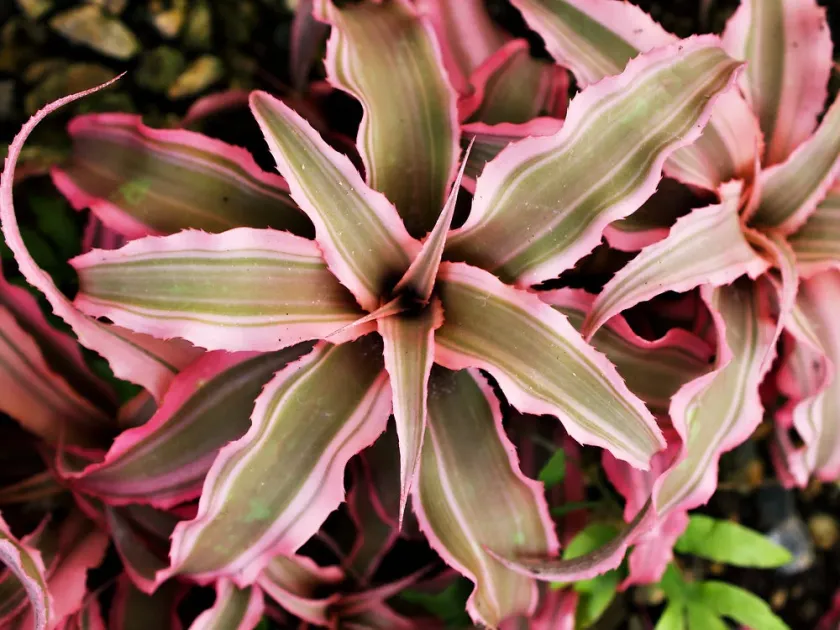
Description
Growing requirements
Cryptanthus beuckeri is a distinct species within the Bromeliaceae family, widely appreciated for its terrestrial growth habit and ornamental foliage. Originating from the tropical rainforests of Brazil, it thrives in environments characterized by filtered sunlight and rich, organic soil composition.
Botanically, this species is defined by its flattened, rosette-forming leaves which display a unique texture and a variegated color pattern. Unlike tank bromeliads, its root system is relatively well-developed, allowing the plant to obtain nutrients directly from the forest floor.
To ensure optimal health, the plant requires a warm climate with temperatures consistently ranging from 20°C to 25°C. Protection from cold drafts and extreme fluctuations in temperature is essential, as the plant is sensitive to thermal stress during its active growth phases.
Light requirements are best met with bright, indirect light. While the plant can tolerate lower light levels, bright, filtered exposure is necessary to maintain the intensity of the leaf coloration and prevent the foliage from becoming overly elongated and dull.
The growing medium must be highly porous and well-draining to prevent root saturation. A mixture consisting of peat moss, pine bark, perlite, and a small amount of charcoal is highly effective, as it maintains necessary acidity and aeration for the root zone.
Main diseases and pests
Root rot is the most significant threat to Cryptanthus beuckeri, typically occurring due to overwatering or insufficient drainage. When water accumulates around the roots and base, the plant becomes highly susceptible to rapid tissue decay and fungal infections.
Spider mites are common pests that thrive in dry indoor conditions. They feed on the sap of the leaves, causing stippling, discoloration, and eventual leaf drop if the infestation is not managed with appropriate miticides or humidity adjustments.
Mealybugs are another frequent issue, often found hiding deep within the tight rosettes of the leaves. These pests are difficult to eradicate once established, requiring systemic insecticides or consistent manual cleaning with alcohol-soaked swabs.
Fungal leaf spot diseases may develop if the foliage remains wet for extended periods in environments with poor air circulation. Improving ventilation and ensuring the center of the rosette does not trap standing water are key preventive strategies.
Regular maintenance, including checking for signs of stress or pest activity, is crucial for long-term survival. Providing a balanced, stable environment usually results in a healthy plant capable of producing offsets, which is the primary method of propagation for this species.