
Crepidiastrum lanceolatum
Crepidiastrum lanceolatum
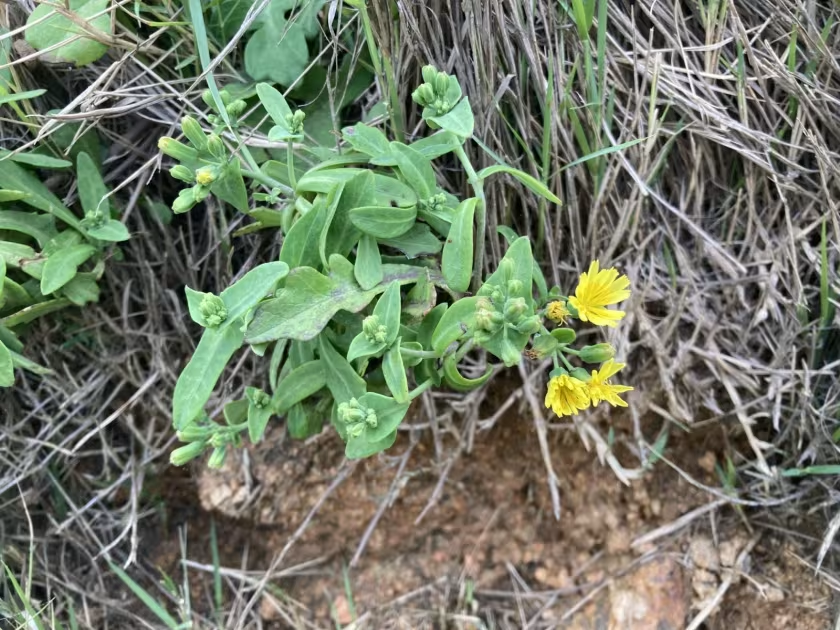
Description
Sowing dates
Sowing should take place in spring once soil temperatures reach a stable 15-18 degrees Celsius. Depending on the local climate, planting usually commences in mid-April or early May to ensure vigorous growth.
For earlier production, growers often use a nursery or greenhouse method, sowing seeds 30-40 days before the final transplanting date. Seeds should be sown shallowly, ideally 0.5 to 1 cm deep, maintaining high soil moisture levels for uniform germination.
Row spacing should be maintained at 25-30 cm to provide adequate space for leaf rosettes to develop fully. Avoid overcrowding to prevent disease pressure and ensure each plant has sufficient access to light and nutrients.
Seedlings typically emerge within two weeks, provided the seedbed remains moist. Consistent watering is crucial during the early stages of establishment to prevent root stunting.
In regions with long summers, a second sowing in August is recommended to obtain an autumn harvest. The plant demonstrates high adaptability to gradually dropping temperatures as the season progresses.
Growing requirements
Crepidiastrum lanceolatum belongs to the Asteraceae family and is a perennial herb native to the coastal regions of East Asia, including parts of Japan and Korea. It is well-adapted to rocky environments and well-drained soils.
This crop thrives in fertile, well-draining loamy or sandy soils with a neutral pH level. Proper site selection is critical, as it requires full sun exposure to maintain its high nutritional value and optimal leaf quality.
While it requires regular watering, it is sensitive to waterlogging. Providing a well-drained environment is essential to protect the root system from decay and soil-borne infections throughout the growing season.
The plant responds favorably to organic fertilization applied before planting, which helps improve soil structure. Nitrogen supplements can be used to promote lush vegetative growth, but should be balanced to prevent soft, vulnerable tissues.
Given its natural habitat, the plant is relatively resilient to environmental stressors, including wind and fluctuating temperatures, making it a reliable choice for commercial and home-scale production.
Main diseases and pests
Aphids are the most common pests affecting this crop, often clustering on the undersides of young leaves. Early detection is vital, and organic insecticidal soaps are effective in controlling infestations without harming the product.
Powdery mildew and various leaf rusts may appear during periods of high humidity and poor air circulation. Management strategies include ensuring proper spacing between plants and maintaining adequate airflow in the growing area.
Slugs and snails can cause significant damage to young leaves, particularly during wet weather. Using mulch or mechanical barriers can help protect the plants from these mollusks.
Root rot occurs primarily due to poor soil drainage or overwatering. Preventing this condition relies on implementing a proper irrigation schedule and ensuring that the planting site has good drainage capabilities.
Integrated pest management, including regular crop scouting, is the best approach to maintain plant health and reduce the need for synthetic chemical treatments, which is critical for leafy green crops.
Harvesting
Harvesting is typically done through a cut-and-come-again method, where outer leaves are carefully removed, allowing the center of the rosette to continue producing new foliage throughout the season.
The first harvest can usually begin 60-70 days after germination. At this stage, leaves should be crisp, bright green, and free from any signs of early bolting or bitterness caused by stress.
Using sharp scissors or a knife is essential to make clean cuts, preventing tissue damage and potential infection points. Early morning harvesting is preferred as it ensures the leaves are hydrated and maintain better quality after harvest.
Once harvested, the produce should be cooled immediately to slow down respiration and wilting. Storage at low temperatures (around 2-4 degrees Celsius) helps maintain freshness for up to a week.
The leaves are primarily used in fresh salads or as a nutritious garnish, valued for their distinct flavor profile. Proper post-harvest handling ensures that the culinary quality of the plant is preserved for the consumer.