
Dyer's chamomile
Cota triumfetti
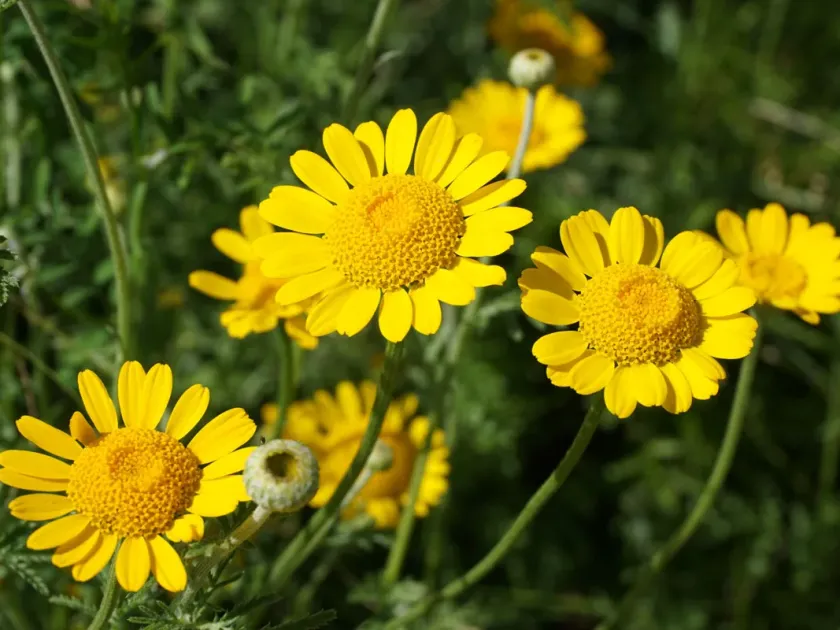
Description
Sowing dates
Dyer's chamomile (Cota tinctoria), also known as golden marguerite, is a hardy herbaceous perennial of the Asteraceae family. It is widely recognized for its historical use as a source of yellow dye and its aesthetic value.
Sowing typically takes place in early spring, as soon as the soil can be worked. Seeds are small and require a shallow sowing depth, approximately 0.5 cm, to ensure successful germination and emergence.
For commercial cultivation, row spacing should be maintained at about 40 to 60 cm. This provides adequate space for mechanical weeding and ensures that each plant receives sufficient nutrients and light.
Germination is generally reliable if the soil moisture is kept constant during the initial establishment phase. Under favorable conditions, seedlings appear within two to three weeks of planting.
The plant spends its first year establishing a dense basal rosette of finely divided leaves, developing a sturdy taproot that supports vigorous floral production in subsequent years.
Growing requirements
This crop is highly heliophilic and thrives in full sun exposure. It is crucial to select planting sites that are not shaded by trees or structures to ensure optimal production of flower heads.
Soil requirements are relatively modest; however, Dyer's chamomile prefers well-drained, sandy, or loamy soils. It excels in conditions where other more demanding crops might fail, including slightly poor soils.
Excellent drought tolerance is one of the key agronomic features of Cota tinctoria. Once established, the deep taproot allows the plant to survive extended dry periods with minimal water input.
The ideal pH range for this plant is between 6.0 and 7.5. It does not tolerate waterlogged conditions, so choosing a site with natural drainage or creating raised beds is highly recommended.
Winter hardiness is exceptional, allowing the crop to overwinter successfully in most temperate climates. It does not require special winter protection, making it a low-maintenance perennial option.
Main diseases and pests
Fungal issues, particularly powdery mildew, can occur in stagnant, humid air environments. Ensuring proper plant density and good air circulation is the most effective preventative strategy.
Common pests such as aphids may occasionally congregate on the flower buds. If left unchecked, they can reduce the quality of the harvested material, necessitating early monitoring and intervention.
Root pests, including wireworms, can occasionally be problematic in newly broken ground. Rotating crops and practicing good field sanitation are essential to keep these populations under control.
The plant is generally resistant to many common agricultural pests, which reduces the need for extensive chemical inputs. Integrated pest management strategies are sufficient to protect the crop.
To ensure high-quality yields, fields must be kept free of competing weeds, especially during the first year of growth when the seedlings are still gaining strength.
Harvesting
Harvesting should be timed to coincide with full bloom, when the yellow flower heads are completely open. This is when the concentration of dye-yielding pigments is at its absolute maximum.
Manual harvesting is common for smaller plots, while larger fields are harvested using specialized machinery. The flower heads should be handled gently to maintain their integrity and market value.
Immediate drying is critical after harvest. The material must be spread thinly in a shaded, well-ventilated area or in a mechanical dryer at temperatures below 45 degrees Celsius to prevent degradation.
Properly dried product should be stored in a cool, dark, and dry environment. High-quality material remains stable for up to two years if protected from moisture and direct sunlight.
Beyond its traditional use as a textile dye, the crop has gained interest in modern sustainable agriculture and landscaping, providing multiple pathways for economic returns.