
Dyer's chamomile
Cota tinctoria
Description
Sowing dates
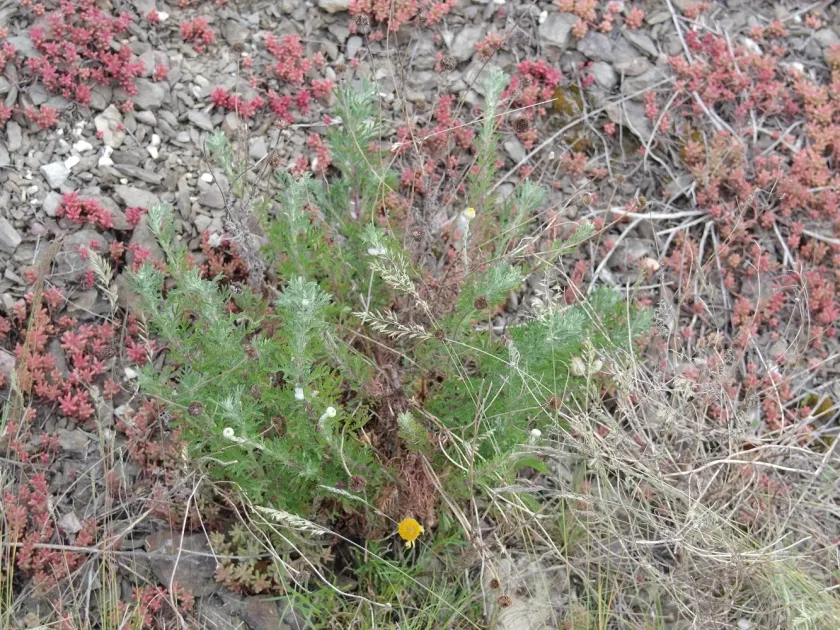
Dyer's chamomile (Cota tinctoria) is a perennial member of the Asteraceae family known for its golden-yellow daisy-like flowers. It is widely valued for its natural dye properties and its ornamental appeal, making it an excellent candidate for specialized agriculture.
The optimal time for sowing is early spring when the soil temperature consistently reaches 8-10 degrees Celsius. In regions with milder climates, late autumn sowing is also feasible, allowing the seeds to benefit from winter stratification, which significantly improves spring germination rates.
Seeds should be sown at a shallow depth of 1-2 centimeters, as they require light for optimal germination. A row spacing of 30 to 45 centimeters is recommended to provide sufficient space for growth and to allow for mechanical weed control between the rows during the establishment phase.
The germination period typically spans two to three weeks, during which consistent soil moisture is crucial. Seedlings develop slowly in the first few weeks, requiring growers to remain vigilant against weed pressure, which can easily suppress the young plants during this stage.
Proper plant density, around 300,000 to 400,000 plants per hectare, ensures maximum biomass production. Once the plants establish their robust root systems, they become highly competitive and start to form thick, productive stands that can yield harvests for several consecutive years.
Growing requirements
This crop is remarkably undemanding, thriving in a variety of soil types including poor, rocky, and sandy soils. It shows a strong preference for sunny locations, which are essential for stimulating high pigment concentration and abundant flower production throughout the season.
Dyer's chamomile is highly drought-tolerant once established, requiring little to no irrigation in temperate regions. It is critical to avoid waterlogged areas, as the plant is susceptible to root rot when exposed to stagnant water conditions over extended periods.
While the crop does not have stringent fertility requirements, a balanced application of phosphorus and potassium fertilizers at the start of the growth cycle can boost overall yield. Neutral soil pH is ideal, as overly acidic soils tend to stunt the plant's development and reduce flower count.
As a hardy perennial, it survives cold winters without special protection, provided the plants are well-rooted before the first hard frost. In autumn, avoiding excessive nitrogen fertilization helps the plants harden off and enter dormancy successfully, ensuring winter survival.
The plant performs well in diverse crop rotations and is often used to stabilize light soils due to its deep taproot system. It is generally resistant to many agricultural challenges, making it an efficient crop choice for low-maintenance cultivation systems.
Main diseases and pests
While generally robust, Dyer's chamomile can face pressure from aphids and certain beetles that target the reproductive parts of the plant. Monitoring these pests during the early flowering stage is vital to ensure high-quality yields for the dye and herbal markets.
Fungal diseases like powdery mildew may appear during periods of high humidity and poor air circulation. To manage these risks, maintaining proper spacing between plants and ensuring the field remains free of dense, moisture-trapping weed growth is an effective preventative strategy.
Weeds are the primary threat during the initial growth stages, as the plant's slow development makes it vulnerable to early-season competition. Regular cultivation of the inter-row spaces is the standard practice for keeping the crop field clean and promoting healthy plant growth.
The use of broad-spectrum chemical pesticides should be limited to avoid degrading the quality of the harvested flowers, which are often used in sensitive manufacturing processes. Integrated Pest Management (IPM) practices offer the most sustainable approach to crop protection.
Cultural practices such as crop rotation and using certified healthy seeds are fundamental to minimizing the incidence of soil-borne pathogens. A well-managed, well-ventilated field rarely suffers from severe disease outbreaks if basic agricultural hygiene is practiced.
Harvesting
Harvesting is conducted during the peak flowering stage when the flower heads are fully open and possess the deepest color. This stage corresponds to the highest concentration of pigments like xanthophylls, which are prized for natural dyeing applications.
Mechanical harvesting involves cutting the flower heads along with a portion of the stem, typically 10-15 centimeters above the ground. It is essential to perform the harvest on a dry day, as damp flowers are difficult to dry properly and are prone to spoilage.
Immediate post-harvest drying is required to preserve the biological integrity and pigment quality. Drying at temperatures below 45 degrees Celsius in well-ventilated facilities prevents the flowers from browning and ensures the final product meets industrial quality standards.
Post-harvest cleaning includes removing stems, debris, and dust to ensure the purity of the raw material. Once processed, the dried flowers should be stored in cool, dark, and dry conditions to maintain their color vibrancy and structural integrity for the long term.
For seed production, harvesting is delayed until the flower heads are fully brown and dry. The seeds are extracted through threshing and winnowing, requiring careful handling to prevent seed loss, as they are very light and can easily be scattered by wind during the collection process.