
Codonopsis clematidea
Codonopsis clematidea
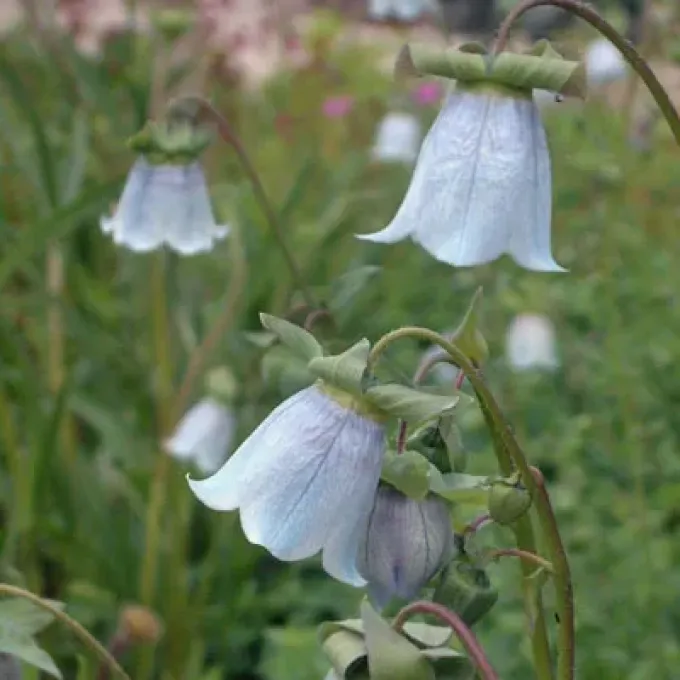
Description
Sowing dates
Sowing of Codonopsis clematidea seeds should be performed in late autumn for winter stratification or early spring after cold treatment. Due to the very small size of the seeds, they should be sown on the surface and pressed slightly into the soil without deep coverage.
For spring sowing in greenhouse conditions, an optimal temperature of 18–20 degrees Celsius is required. Moisture levels must be kept stable, as fluctuating humidity during germination significantly reduces the success rate of seedling emergence.
Transplanting seedlings into open ground is best timed after the risk of late spring frosts has completely passed. The plant develops a deep taproot, which makes moving it difficult, so careful handling of the root ball is essential during the transplanting process.
Standard spacing between plants is recommended to be 30 to 40 centimeters. This distance is crucial for maintaining adequate airflow around the foliage, which is a key factor in preventing fungal disease outbreaks during damp weather.
The site selection should focus on areas with partial shade and wind protection. While the plant can tolerate some sun, it performs significantly better when shielded from the intense afternoon heat in drier climates.
Growing requirements
Codonopsis clematidea belongs to the Campanulaceae family and is known for its fleshy roots and bell-shaped flowers. It originates from high-altitude regions in Central Asia, where it is adapted to cool, rocky, and well-drained slopes.
The species requires soil that is light, nutrient-rich, and highly permeable. Heavy clay soils should be avoided or amended with sand and organic compost to ensure proper drainage and root development, preventing potential waterlogging.
The plant thrives in regions with a moderate climate. It is considered reasonably cold-hardy, but in regions with harsh winters lacking snow cover, protective mulching with organic material is advised to prevent the ground from freezing too deeply.
Watering management should be precise; the soil should remain consistently moist during the active growth phase but should never stay waterlogged. Poor drainage is the most common cause of root failure in this agricultural crop.
Adequate soil aeration is also important for the healthy development of the root system. Periodic light hoeing around the base of the plant helps maintain soil structure and promotes oxygen exchange to the roots.
Main diseases and pests
The most significant threat to Codonopsis clematidea is root rot, typically caused by fungi such as Pythium or Phytophthora when soil drainage is insufficient. Prevention through proper water management is more effective than any chemical treatment.
Powdery mildew may occur on the leaves during periods of high humidity or stagnant air. Implementing proper spacing between plants and using preventive organic fungicides can minimize the impact of this condition on the plant's yield.
Slugs and snails often feed on the tender young growth in the spring. Protective barriers, such as copper tape or crushed eggshells, or the use of approved molluscicide baits, can effectively control these pests.
Soil-dwelling insects, such as wireworms, can damage the taproots. Drip irrigation systems and maintaining a clean field free of perennial weeds can help keep these pest populations at manageable levels throughout the growing season.
Early diagnosis is vital for the survival of the crop. Regular inspections of the foliage and the base of the stem allow for quick intervention before a disease or pest infestation spreads across the entire field.
Harvesting
Harvesting for medicinal root production is typically performed in the third or fourth year of growth. At this stage, the taproots have reached sufficient size and contain the highest concentration of phytochemicals, particularly the active glycosides.
Harvesting occurs in late autumn after the aerial parts have naturally withered. The roots must be carefully excavated to avoid breakage, as damaged roots are more susceptible to decay during the drying process.
Post-harvest, roots are thoroughly washed to remove soil particles and dried in a well-ventilated area or specialized dehydration unit. The temperature should be maintained between 40 and 50 degrees Celsius to preserve the quality of the raw material.
Storage should be in cool, dark, and dry conditions. Properly processed roots can remain stable for up to two years when kept in breathable packaging, such as jute or paper bags, away from humidity and direct sunlight.
Beyond its pharmaceutical value, Codonopsis clematidea is gaining popularity in the horticultural trade. It is highly valued for rock gardens and naturalistic plantings due to its unique, elegant flowers and relative ease of care in appropriate environments.