
Coccothrinax miraguama
Coccothrinax miraguama
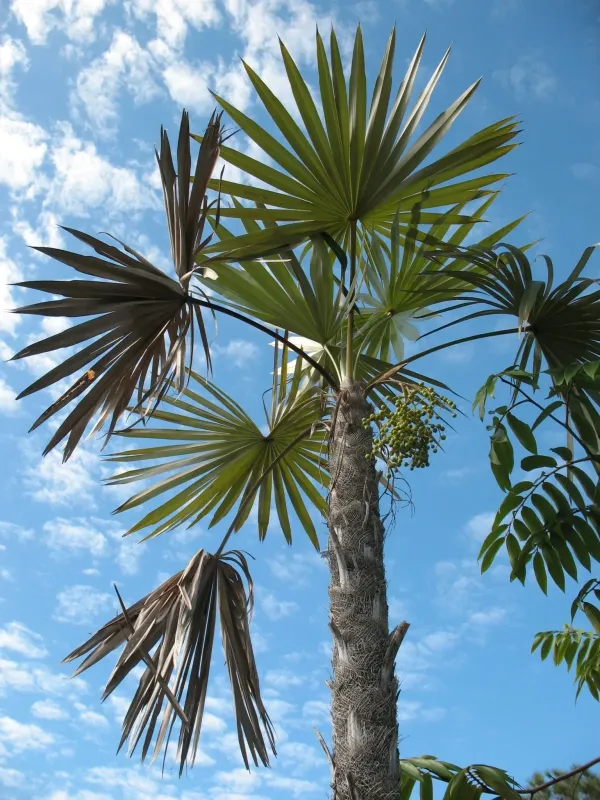
Description
Growing requirements
Coccothrinax miraguama is a slow-growing fan palm native to the island of Cuba. As a member of the Arecaceae family, it is highly valued for its elegant, slender trunk and distinctive, silvery-green foliage, often used in ornamental landscaping.
The plant thrives in full sun, which is crucial for maintaining its structural integrity and leaf coloration. When cultivated in containers, it requires a location with maximum sunlight exposure, although it can tolerate partial shade in extremely hot climates.
The soil requirement is specific: it needs a very porous, well-draining medium. A mix of peat, coarse perlite, and small limestone chips or granite grit ensures that water flows away from the roots, preventing common saturation issues.
Regarding climate, this palm is not frost-tolerant. It requires consistent temperatures and protection from cold winds. In temperate regions, it must be kept in a greenhouse or indoors during the winter months, ensuring it does not experience severe chilling.
Watering practices should follow the cycle of the seasons. During the active growing period, keep the soil lightly moist but never waterlogged. As temperatures drop in winter, allow the substrate to dry out more significantly between waterings.
Main diseases and pests
The most significant threat to Coccothrinax miraguama is root rot caused by poor drainage. Excess water retained in the root zone quickly promotes fungal growth, which is often fatal if not identified and treated early by correcting soil moisture.
Spider mites are common indoor pests, especially when the ambient air is dry and warm. These pests thrive in stagnant conditions, so ensuring good air circulation around the palm crown is essential to keep populations at bay.
Scale insects can attach themselves to the stems and leaf bases, weakening the plant by sucking sap. These pests are protected by a hard shell, making them difficult to eradicate without the use of systemic insecticides or manual removal.
Mealybugs are another potential nuisance that can hide in the dense fibers of the palm's trunk. Detecting them early is key; if left untreated, they can spread to the new, tender leaves, causing stunted growth and leaf deformation.
Nutrient deficiencies, specifically magnesium and iron, can cause yellowing of the leaves (chlorosis). Maintaining a consistent fertilization schedule with high-quality palm fertilizer helps prevent these issues and maintains the plant's overall health.