
Silver thatch palm
Coccothrinax argentata
Description
Growing requirements
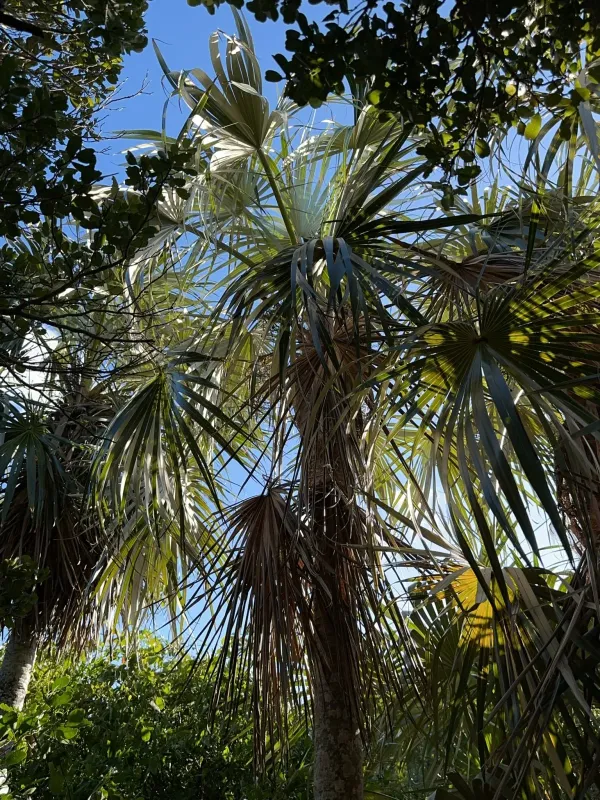
The Silver thatch palm (Coccothrinax argentata) is a distinct species belonging to the Arecaceae family. It is native to the coastal regions of Florida and the Caribbean, where it naturally thrives in rocky, limestone-based soils and sandy substrates.
This species is highly regarded for its slow growth rate and slender, solitary trunk. Its most iconic feature is the fan-shaped foliage, which displays a brilliant silver coloration on the underside, providing both aesthetic appeal and environmental adaptation to high solar radiation.
Regarding climate requirements, the plant is suited for tropical and subtropical zones. It demands full sun exposure to maintain its compact growth form and silver leaf sheen. Shade-grown specimens tend to become leggy and less resilient to environmental stressors.
Soil management for Coccothrinax argentata is critical. Because of its native habitat, it prefers an alkaline or neutral substrate with excellent drainage. In cultivation, incorporating horticultural sand or perlite into the mix is highly recommended to prevent soil compaction.
General horticultural practices include controlled fertilization with slow-release formulas rich in nitrogen, potassium, and magnesium. Proper irrigation is necessary during the establishment phase, though mature specimens demonstrate significant drought tolerance.
Main diseases and pests
Common pests affecting this palm include mealybugs and scale insects, which can colonize the base of the petioles and the undersides of the leaves if the plant is neglected.
The primary pathogenic threat involves fungal leaf spot diseases and root rot, which are almost exclusively caused by poor drainage and excessively high ambient humidity without proper air circulation.
Nutrient deficiencies, particularly boron or potassium deficiency, often manifest as deformed new growth or yellowing of older leaves, requiring targeted supplementation.
Regular sanitation of the canopy is essential to minimize the accumulation of debris that can harbor fungal spores and provide hiding places for pests.
- Use of systemic insecticides when necessary.
- Ensuring adequate spacing between plants to improve airflow.
- Monitoring soil moisture levels with a hygrometer.