
Clementine
Citrus clementina hort. ex Tanaka
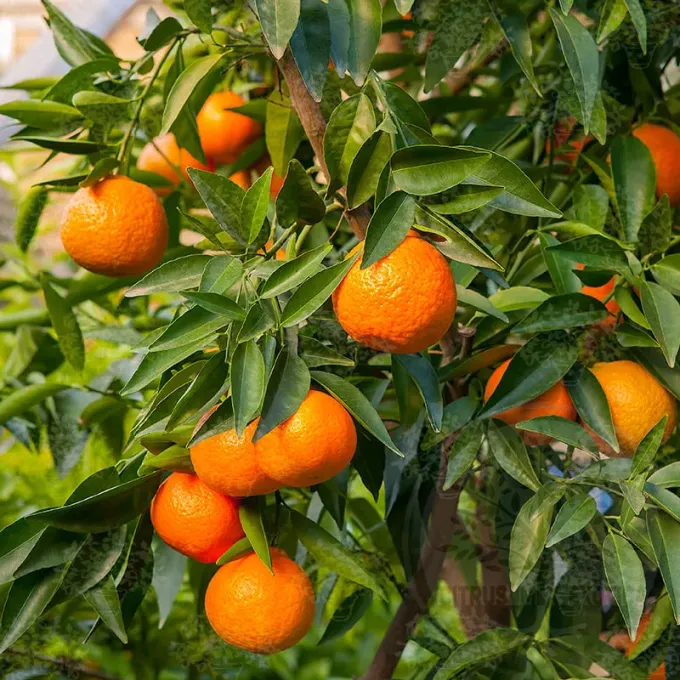
Description
Growing requirements
Clementine (Citrus clementina) is a prominent member of the Rutaceae family and is widely recognized as a hybrid between the willow-leaf mandarin orange and the sweet orange. It is a highly appreciated agricultural crop in the citrus industry.
The plant thrives in subtropical climates, requiring long, warm summers and mild winters. It is highly sensitive to frost, with temperatures below -3 degrees Celsius posing a significant risk of damage to branches and fruit production.
Clementines perform best in well-draining soils with a sandy loam texture. A soil pH ranging between 5.5 and 7.0 is ideal to ensure optimal nutrient uptake, particularly for essential micronutrients like iron and magnesium.
Adequate sunlight exposure is a prerequisite for successful commercial production. Trees require a full-sun location to ensure proper carbohydrate synthesis and to enhance the sugar content and coloration of the ripening fruit.
Proper water management is essential for clementine cultivation. While the tree requires consistent moisture for healthy growth, excessive soil saturation must be avoided to prevent phytophthora and other root-related diseases.
Yield
The yield of a mature clementine tree typically ranges from 30 to 50 kg per season, depending on the specific cultivar, tree age, and orchard management practices. High-density planting schemes can significantly boost per-hectare productivity.
Commercial orchards utilize systematic pruning to maintain an open canopy. This practice is crucial for increasing light penetration, which directly translates into higher fruit yields and improved exterior quality.
Harvesting is usually carried out by hand in multiple passes to ensure that only fruit with the correct brix levels and color development are picked. This careful handling maintains fruit integrity for long-distance transport.
Clementines are versatile in their economic application, being primarily sold as fresh table fruit, but they are also essential in the juice industry and as a flavoring agent for the food and beverage sectors.
Optimal nutrition programs focusing on nitrogen during the vegetative stage and potassium during the fruit-set stage are key strategies employed by professionals to maximize annual yield stability.
Main diseases and pests
Clementine trees are susceptible to several major pests, including citrus red mites, scale insects, and aphids. These organisms reduce the photosynthetic capacity of the foliage and can lead to significant economic losses if uncontrolled.
Fungal pathogens such as anthracnose and citrus scab represent major threats in humid environments. These diseases can lead to blemishes on the fruit skin, significantly reducing the market value of the harvest.
Integrated Pest Management (IPM) is the standard approach for controlling threats in modern orchards. This involves monitoring pest populations and using biological controls where possible to minimize chemical usage.
Effective orchard management requires strict hygiene practices, such as the removal of deadwood and the disinfection of pruning tools, to prevent the spread of systemic diseases like tristeza or citrus canker.
- Periodic monitoring of leaf surface for pest activity.
- Application of copper-based fungicides as a preventative measure.
- Maintaining optimal orchard drainage to reduce humidity-related stress.