
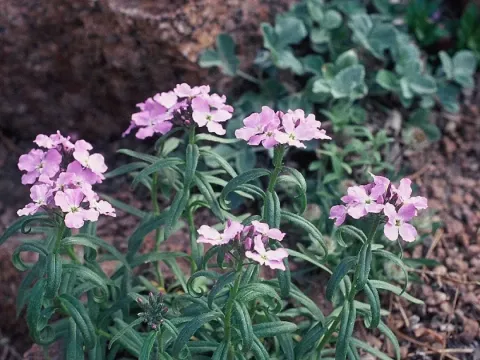
Clausia
Clausia
Clausia is a genus of perennial herbaceous plants belonging to the Brassicaceae family. Naturally occurring in arid, steppe, and rocky regions, these plants have evolved to thrive in environments with specific climatic challenges, which dictates their optimal growth cycle.
What the section contains

Clausia
For agricultural cultivation, the sowing process usually begins in early spring. The seeds require a well-prepared seedbed with fine soil structure to ensure consistent germination. Shallow sowing at a depth of 1 to 2 centimeters is recommended.
In regions with harsh winters, late autumn sowing can also be successful, as it allows the seeds to undergo natural stratification, often leading to more vigorous early growth when the soil warms up in the spring.
Spacing is a crucial factor for the long-term health of the crop. Since Clausia establishes a deep root system, providing adequate space between plants prevents competition for water and nutrients, especially in more arid production environments.
Growth during the first year is primarily vegetative, focusing on the development of a strong root system and a basal leaf rosette. The plant typically reaches its full reproductive potential, including flowering, in the second year of cultivation.
The primary environmental requirement for Clausia is full sun exposure. The plant is highly sensitive to shading, which significantly impacts its developmental vigor and potential for biomass production or seed yield.
Soil composition should ideally be light, sandy, or loamy with excellent drainage. Clausia is intolerant of waterlogged soil conditions, which can lead to root rot and other systemic issues that are common in less porous soil types.
Tolerance to drought is one of the most significant traits of this genus. It is well-adapted to moisture-limited environments, making it a viable candidate for sustainable agriculture in dryland regions where water resources are scarce.
Temperature tolerance is robust, as the plant is adapted to the continental climate of its native ranges. It survives extreme winter cold and is capable of enduring hot, dry summer months without suffering from significant thermal stress.
Fertility management should focus on maintaining a neutral to slightly alkaline pH. The application of calcium-rich amendments is often beneficial, as it supports the structural integrity of the plant tissues, a common trait for members of the mustard family.
Crucifer flea beetles are the most frequent pests affecting the establishment phase. These insects can rapidly defoliate young seedlings, making vigilant scouting and timely intervention necessary for a successful harvest.
Fungal diseases, including those that cause leaf spotting or root decay, may occur if air circulation is poor or if the planting density is too high. Maintaining adequate distance between plants helps to reduce the micro-humidity that promotes fungal spread.
Larvae of various lepidopteran species can occasionally cause damage to the foliage during the summer. Integrated pest management, focusing on biological controls, is preferred to maintain the ecological balance of the plantation area.
Nutrient deficiencies, particularly boron or molybdenum, can manifest as distorted growth or chlorosis. Soil and leaf tissue analysis is recommended to adjust fertilization programs and prevent such physiological stress.
Effective crop rotation is essential. To avoid the accumulation of soil-borne pathogens specific to Brassicaceae, it is recommended to avoid consecutive planting of Clausia on the same land without proper intervals or alternative crops.