
Kumquat
Citrus japonica Thunb.
Description
Growing requirements
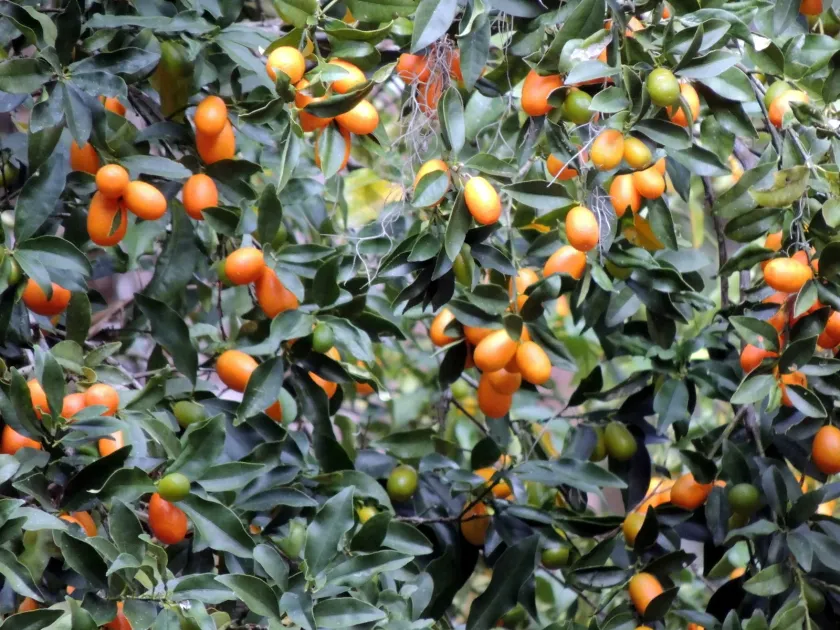
Kumquat (Citrus japonica Thunb.) is an evergreen fruit-bearing tree belonging to the Rutaceae family. It is known for its compact size, glossy dark green foliage, and fragrant white flowers that produce small, edible, orange fruits.
This species thrives in subtropical climates, preferring full sun exposure. While it is more cold-hardy than many other citrus species, it still requires protection from frost and temperatures below 0°C to prevent tissue damage.
Soil composition must be well-drained, fertile, and slightly acidic, with a pH ranging from 5.5 to 6.5. Consistent moisture is vital, but the roots must never stand in water, as this leads to root rot.
Humidity management is crucial, especially when grown indoors. Frequent misting or the use of a humidifier helps maintain the ambient moisture levels necessary for healthy leaf development.
The plant originates from Southeast Asia and is widely cultivated for both ornamental purposes and its unique fruit, which can be eaten whole, including the sweet rind.
Main diseases and pests
Spider mites are the most frequent pests, thriving in dry and warm conditions. They cause stippling on the leaves and can lead to significant defoliation if left unchecked.
Scale insects often attach to the stems and branches, creating a protective waxy covering. These pests extract sap, weakening the tree and promoting the growth of sooty mold.
Mealybugs appear as white, cottony masses in the leaf axils. They stunt growth and can lead to the formation of distorted leaves and buds during the active growing season.
Root rot, typically caused by Phytophthora, is a severe threat usually associated with over-irrigation or heavy, non-porous soil mixtures that impede drainage.
Integrated Pest Management (IPM) practices, including proper sanitation and monitoring, are the most effective ways to maintain the health of the Kumquat tree throughout the year.
Harvesting
Harvesting usually occurs when the fruits have turned a deep, uniform orange color and feel slightly firm but yield slightly to gentle pressure. The timing depends on the specific cultivar and local conditions.
It is recommended to clip the fruits from the tree rather than pulling them off, as this prevents damage to the delicate branches and the fruit rind itself.
Kumquats are unique among citrus fruits because the rind is sweet and the flesh is sour, providing a balanced flavor profile when consumed whole.
Proper nutritional management, emphasizing potassium during the fruit-set stage, is essential for maximizing yield. Avoid excessive nitrogen applications, which can result in lush foliage at the expense of fruit quality.
Post-harvest, fruits should be stored in a cool, well-ventilated area or a refrigerator. They have a relatively long shelf life compared to other thin-skinned citrus due to their natural protective oils in the skin.