
Yellow passion fruit
Citrus flavicarpa hort. ex Tanaka
Description
Sowing dates
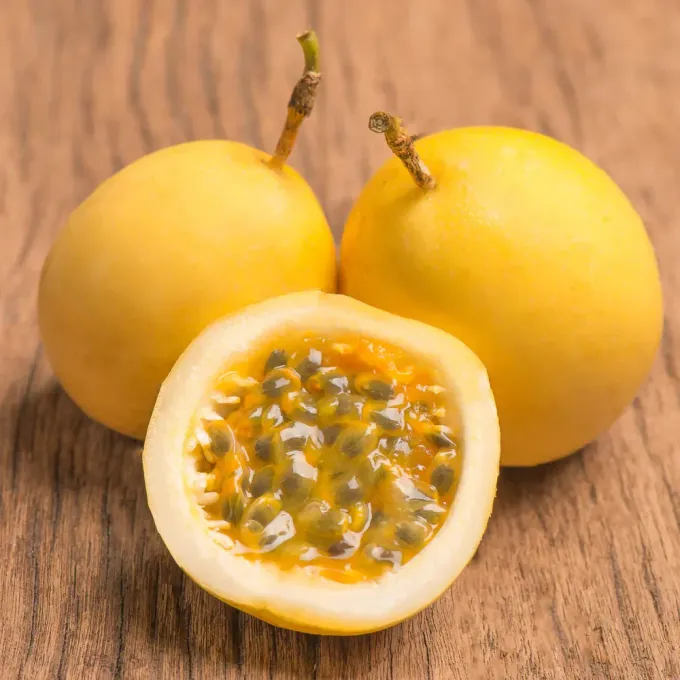
Yellow passion fruit (Passiflora edulis f. flavicarpa) is a woody perennial vine of the Passifloraceae family, primarily grown for its aromatic fruits.
Propagation is typically done via seeds, which are sown in nursery beds or containers to ensure a vigorous start before field transplantation.
Seeds require high soil temperatures for successful germination and should be sown in well-draining, sterile potting media to prevent early damping-off.
Young seedlings are sensitive to transplant shock, so it is recommended to keep them in the nursery until they reach a height of at least 20–30 cm.
Proper spacing is crucial when transplanting to the field to ensure adequate airflow and sunlight penetration, which helps reduce disease pressure later on.
Growing requirements
This crop thrives in tropical and subtropical climates, requiring consistent temperatures between 20°C and 30°C for optimal metabolic activity.
It prefers deep, well-drained loamy soils with a pH ranging from 6.0 to 6.5, which facilitates efficient nutrient uptake and healthy root growth.
Adequate water supply is essential during the flowering and fruit-setting stages, though excessive water stagnation must be strictly avoided.
As a climbing vine, yellow passion fruit requires sturdy trellises, such as fence-style or overhead systems, to support the heavy weight of the fruit.
Full sun exposure is mandatory, as shaded conditions lead to poor fruit quality, lower sugar content, and excessive vegetative overgrowth at the expense of yield.
Yield
The yellow passion fruit variety is generally more productive than the purple variety, often reaching higher yield volumes per hectare under good management.
Farmers can typically harvest their first crop within 9 to 12 months post-transplantation, with yields peaking during the second and third years of life.
Effective pollination is the most significant factor for yield, and in some regions, hand-pollination is practiced to ensure consistent fruit development.
Regular fertilization with balanced NPK formulas, supplemented with micronutrients like boron and zinc, is vital to prevent fruit drop and nutrient deficiencies.
Productive lifespan is relatively short, typically lasting 3 to 5 years, after which the plant’s productivity declines, necessitating replanting the orchard.
Main diseases and pests
The crop is highly susceptible to viral diseases, most notably Passion Fruit Woodiness Virus, which causes stunted growth and deformed fruit.
Fungal diseases like Fusarium wilt and collar rot are common in humid conditions and can cause rapid mortality of entire vine stands if left unchecked.
Pests such as fruit flies, aphids, and mites are significant threats that damage leaves and fruits, often acting as vectors for viral transmissions.
Integrated pest management (IPM) strategies, including the use of resistant rootstocks and biological control agents, are recommended for long-term health.
Crop rotation and strict sanitation practices, such as removing infected vines immediately, are essential to maintain a healthy production environment.
Harvesting
Harvesting is performed by hand when the fruits turn a uniform yellow color and are easily detached from the main stem or fall to the ground.
Regular harvesting schedules, ideally daily during peak season, prevent fruit from sitting on the ground, which significantly increases spoilage and disease.
After harvest, fruits must be handled with care to prevent skin abrasions, which lower the commercial value and increase the rate of moisture loss.
Fresh fruit should be kept in a cool, shaded environment immediately after harvesting to maintain freshness before being sent to packing facilities.
Yellow passion fruit is widely used for fresh consumption, as well as for the extraction of juice, nectars, and flavoring agents for the food industry.