
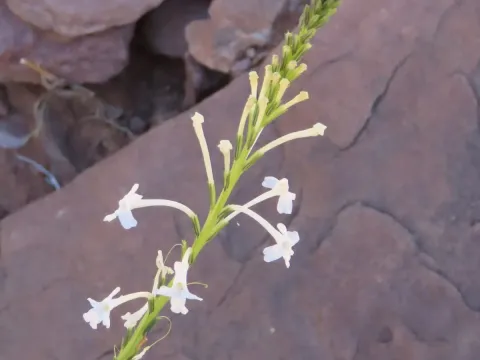
Chascanum
Chascanum
The genus Chascanum comprises various perennial herbs and subshrubs that reproduce primarily through seeds in their natural habitats.
What the section contains

Chascanum
In agricultural settings, seeds are sown into a high-porosity substrate that ensures excellent aeration and moisture control to prevent damping off.
The sowing season typically begins in the spring when soil temperatures reach optimal levels, usually above 20 degrees Celsius for consistent germination.
Seeds may require light scarification or pre-soaking in water to break dormancy and ensure a uniform emergence of seedlings across the seedbed.
Transplanting into the field is carried out once the danger of late frost has passed, ensuring that young plants establish themselves before extreme summer heat.
Belonging to the Verbenaceae family, Chascanum species are native to the arid and semi-arid regions of Africa and parts of Western Asia.
The plants are remarkably hardy and demonstrate significant tolerance to nutrient-poor soils, including sandy or gravelly terrain common in their native range.
Full sun exposure is a fundamental requirement for the development of the plant, as it helps in maintaining its characteristic compact growth habit.
Irrigation management is crucial; while the plant withstands drought well, supplemental watering during peak growth stages significantly enhances total biomass.
Soil pH levels should generally be maintained within a neutral range, as extreme acidity or alkalinity may limit nutrient availability for the plant.
Fungal diseases, particularly those related to root pathogens, are the primary concern for Chascanum cultivation when drainage is inadequate.
Sucking insects such as aphids and spider mites can become problematic during hot and dry spells, requiring careful monitoring of the crop canopy.
Preventative measures include maintaining proper plant spacing to ensure airflow, which significantly reduces the humidity levels around the foliage.
Integrated pest management strategies are recommended, focusing on biological controls before resorting to chemical interventions for pest reduction.
Good field hygiene, including the removal of dead plant material, is essential to prevent the overwintering of pathogens within the growing area.