
Chara tomentosa
Chara tomentosa
Description
Growing requirements
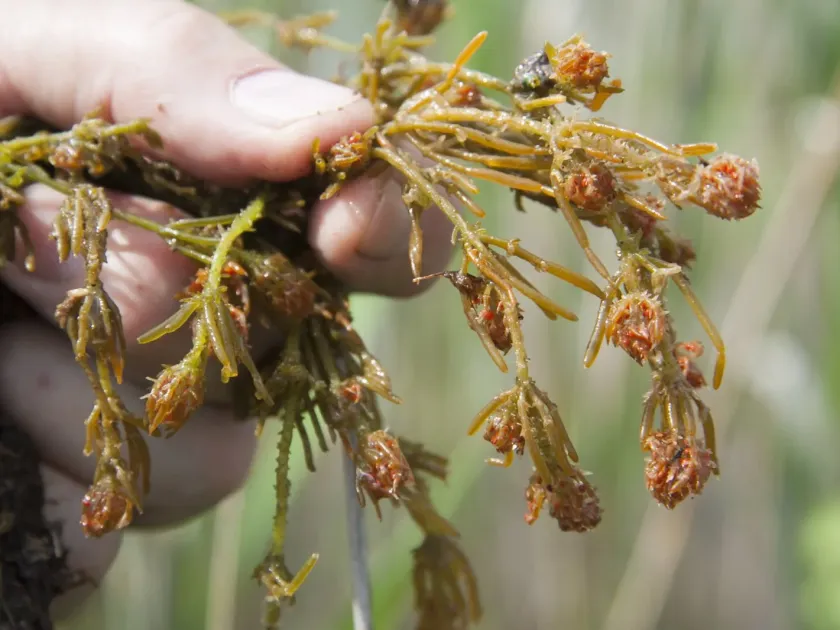
Chara tomentosa, commonly known as the brittlewort or stonewort, is a species of charophyte algae belonging to the Characeae family. It is a complex macroalgae that often resembles higher plants in its structure.
The plant thrives in clear, calcium-rich freshwater environments with alkaline conditions. It is frequently found on sandy or silty substrates where it forms dense, carpet-like meadows on the lake floor.
Botanically, it is characterized by a whorled arrangement of branchlets around a central stem. The surface of the thallus is often heavily encrusted with calcium carbonate, which gives the plant its gritty, brittle texture.
Climate requirements include stable temperatures and high water transparency. Sunlight penetration is the most critical factor for photosynthesis and deep-water survival of the species.
Successful cultivation requires meticulous water management, ensuring that nitrate and phosphate levels remain low to prevent the overgrowth of competing phytoplankton and epiphytic algae.
Yield
The agricultural potential of Chara tomentosa lies primarily in its use as a mineral-rich organic amendment. The biomass is harvested for soil improvement, particularly for crops requiring high calcium content.
It is valued in aquatic farming systems where it helps maintain water quality. Its role in absorbing excess nutrients makes it an essential component of integrated multi-trophic aquaculture.
Commercial yields are achieved through large-scale cultivation in controlled ponds. Regular harvesting promotes regeneration and maintains the biomass in a healthy, juvenile stage that is rich in nutrients.
Experimental use of Chara-based extracts has shown promise as natural growth stimulants for terrestrial agriculture. These extracts contain hormonal compounds that boost plant immunity and seedling vitality.
Dried and processed, it serves as a slow-release fertilizer. Its decomposition in soil gradually releases essential micronutrients, supporting sustainable farming practices and soil health restoration.
Main diseases and pests
Eutrophication is the primary threat to Chara populations. Nutrient loading from agricultural runoff leads to rapid proliferation of planktonic algae, which eventually shades out the stonewort.
Chemical contamination, including heavy metals and herbicides, poses a severe risk. As a bioaccumulator, Chara easily absorbs pollutants, rendering the biomass unsuitable for agricultural reuse.
Specific aquatic pests, including herbivorous fish and certain gastropods, can damage dense mats. However, in balanced ecosystems, the plant exhibits strong resilience to occasional herbivory.
Pathogenic organisms, including certain chytrids and fungi, can attack the thallus when the plant is stressed by poor water quality or mechanical trauma during harvest.
Management strategies focus on buffer zones to filter agricultural runoff and rigorous monitoring of water chemistry to prevent the depletion of dissolved oxygen and fluctuations in alkalinity.