
Opposite stonewort
Chara contraria
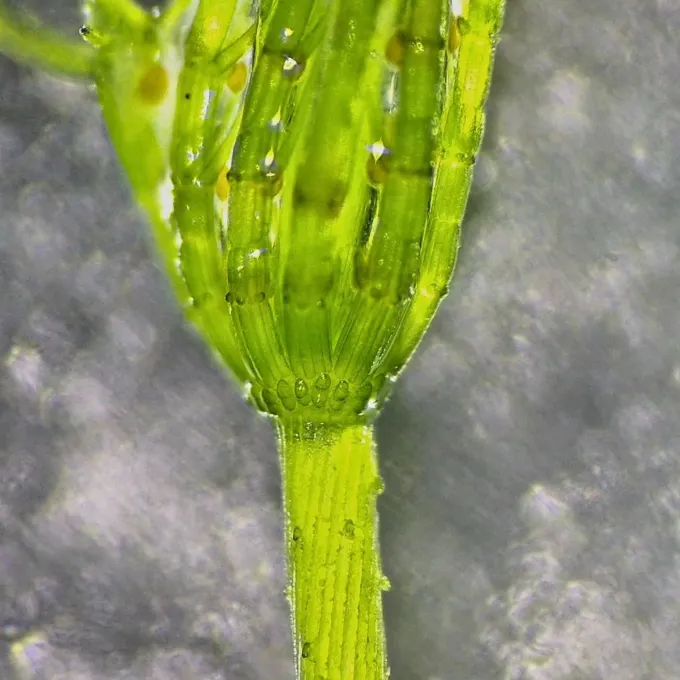
Description
Growing requirements
Chara contraria, commonly known as opposite stonewort, is a species of green algae belonging to the Characeae family. It is distinguished by its complex structure, which mimics higher plants, providing essential habitat for aquatic fauna.
The plant thrives in freshwater ecosystems, particularly those characterized by high calcium levels. Its distribution is widespread across temperate regions, where it forms dense, submerged meadows on the lake or pond beds.
The environmental requirements include high light penetration and stable water chemistry. It functions best in alkaline waters, as the calcification process is essential for its structural integrity and mechanical support.
Agricultural techniques involve maintaining clear water and stable nutrient levels. The species is highly sensitive to turbidity; therefore, sedimentation control is a prerequisite for successful cultivation in man-made reservoirs.
Utilization of the crop spans from bio-remediation of polluted waters to the production of specialized fertilizers. Its ability to absorb nutrients helps in maintaining the ecological balance of aquaculture systems.
Main diseases and pests
Pathogenic microorganisms, specifically those that thrive in stagnant water conditions, pose the primary risk of fungal infections. These pathogens can rapidly decimate large patches of the algal colony.
Invertebrate pests, including certain species of aquatic snails, can significantly reduce biomass by grazing on the vegetative parts of the plants, leading to weakened plant health.
Eutrophication triggered by excessive nitrogen and phosphorus runoff is a major threat. It allows competing algae to overgrow the stonewort, blocking the light necessary for photosynthesis.
Heavy metal accumulation in the tissue is a detrimental factor for the crop. While it helps in cleaning the water, it makes the plant unsuitable for subsequent use as a fertilizer or fodder.
Sudden fluctuations in water level can cause desiccation of the upper layers of the colony. Proper water management infrastructure is crucial to prevent mechanical damage and exposure to air.