
Chara hispida
Chara hispida
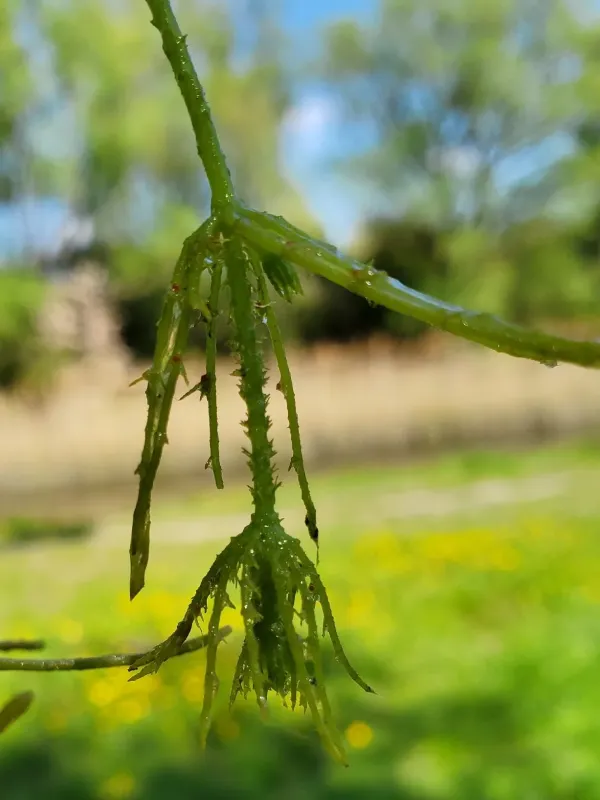
Description
Growing requirements
Chara hispida is a species of charophyte algae belonging to the Characeae family. It is widely distributed across temperate regions, inhabiting freshwater and brackish bodies of water. The plant is known for its complex structure that resembles higher plants, featuring whorls of branches along the main axis.
The species has specific ecological requirements, primarily focusing on water clarity and the concentration of calcium bicarbonate. It thrives in environments where it can sequester calcium, which contributes to the calcification of its thallus, giving it a characteristic brittle and rough texture.
Optimal growth conditions involve neutral to slightly alkaline water and stable light penetration, as the plant is a benthic organism. It prefers substrates rich in minerals and is often found in shallow areas of lakes, ponds, and slow-moving streams where nutrients are balanced.
Regarding its role in water management, Chara hispida acts as a natural water purifier by absorbing excess nutrients and providing stable oxygen levels. Its cultivation is sometimes encouraged in constructed wetlands to prevent the overgrowth of more invasive filamentous algae.
In terms of agricultural and environmental utility, it serves as an excellent bioindicator for water quality assessment. The presence of healthy Chara meadows is often a sign of a well-balanced and stable aquatic ecosystem, which is essential for sustainable fisheries and pond management.
Main diseases and pests
The primary threats to Chara hispida populations include eutrophication, which leads to increased turbidity and algal blooms that block sunlight. High levels of nitrogen and phosphorus runoff from agricultural fields can cause the rapid decline of established charophyte beds.
Pests and diseases include grazing by specialized aquatic snails and certain crustacean species. Additionally, mechanical disturbance from dredging or excessive activity by bottom-dwelling fish species can uproot colonies, leading to localized extinction of the population within the affected area.