
Chara braunii
Chara braunii
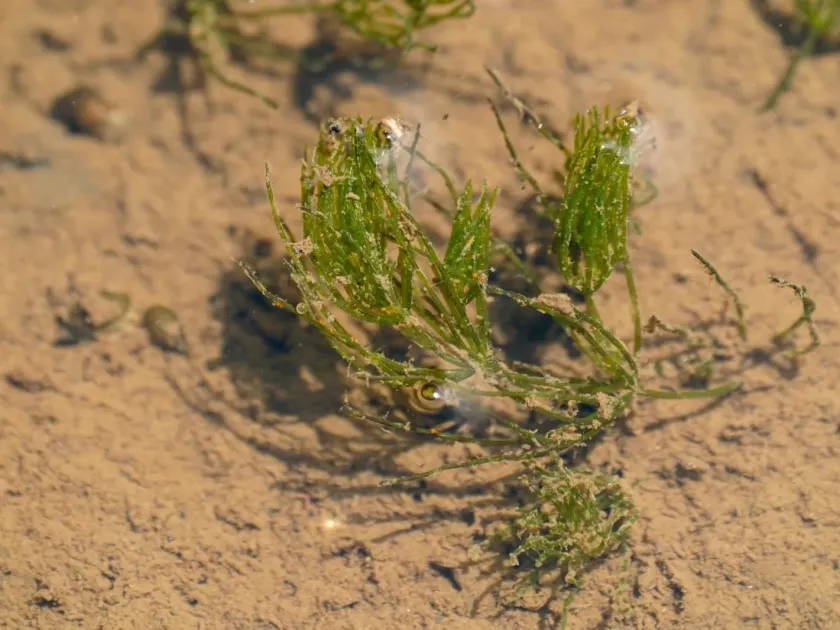
Description
Growing requirements
Chara braunii is a species of macroalgae belonging to the Characeae family. It is often referred to as a stonewort due to the calcium carbonate deposits on its surface, which give the plant a brittle and crusty texture.
The plant has a cosmopolitan distribution, thriving in freshwater environments such as irrigation ditches, ponds, and rice fields. Its structure consists of a main axis with whorls of branchlets, closely resembling higher aquatic vascular plants.
It requires clear, alkaline, and nutrient-poor water to thrive. Excessive nitrogen and phosphorus levels lead to eutrophication, which typically eliminates Chara braunii in favor of more aggressive filamentous algae or phytoplankton blooms.
Growth is strongly dependent on light availability, as this species prefers the benthic zones of shallow water bodies. It can tolerate moderate temperature fluctuations, provided the water remains well-oxygenated and clear of excessive suspended solids.
In terms of practical utility, Chara braunii is an excellent bioindicator and biological filter. By stabilizing the substrate and oxygenating the water column, it plays a vital role in maintaining ecological health in aquaculture and small irrigation systems.
Main diseases and pests
Agricultural runoff containing high concentrations of nitrogen fertilizers poses the single greatest threat to the survival of Chara braunii populations.
Sedimentation and increased water turbidity block essential sunlight, preventing photosynthesis and causing the decay of the algae colonies.
Chemical pollutants, including pesticides and specific herbicides applied in nearby agriculture, can exhibit direct toxicity to charophyte tissues.
Competitive displacement by invasive aquatic plant species or rapid algal blooms often leads to the decline of the stonewort beds in managed water bodies.
Pathogenic fungi that colonize decaying organic matter in water may spread to healthy populations during periods of thermal stress in shallow environments.