
Butia yatay
Butia yatay
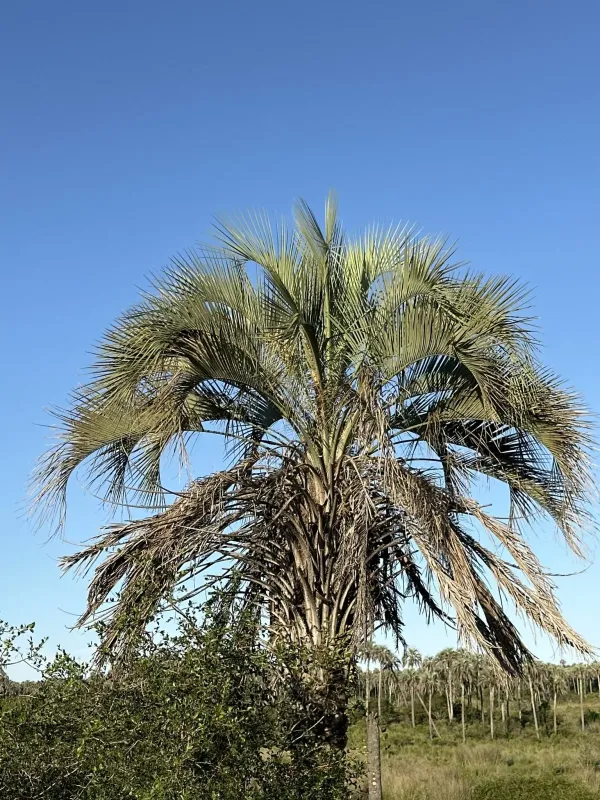
Description
Sowing dates
The propagation of Butia yatay is primarily achieved through seeds, which require specific conditions for successful germination, typically involving high soil temperatures.
Seeds should be planted in a well-draining, sterile medium to prevent fungal infections, with consistent moisture levels maintained throughout the incubation period.
Seedlings are notoriously sensitive to root disturbance, so they should be grown in individual deep containers to accommodate the long taproot characteristic of this species.
When transplanting into the field, it is crucial to ensure that the site has been thoroughly prepared with enriched soil and excellent drainage to promote early growth.
Successful establishment depends on consistent irrigation during the first growing season, allowing the palm to build a robust root system before facing environmental stress.
Growing requirements
Butia yatay belongs to the Arecaceae family and is native to the South American subtropical regions, where it has adapted to specific climatic conditions.
This palm thrives in sandy or well-drained soils, showing a remarkable ability to adapt to various soil compositions provided they remain aerobic and nutrient-rich.
The species is recognized for its frost tolerance compared to other palm varieties, capable of surviving brief exposures to sub-zero temperatures, specifically down to -12°C.
Full sun exposure is a mandatory requirement for the palm, ensuring optimal development of its iconic feathery fronds and supporting the metabolic processes for fruit yield.
While mature trees exhibit significant drought resistance, supplemental watering during prolonged dry spells is recommended to maintain the health and aesthetic quality of the tree.
Yield
The agricultural value of Butia yatay lies in its highly nutritious and flavorful fruits, which are traditionally harvested for local food production.
These fruits are gathered in dense, heavy clusters, and once the tree reaches maturity, usually after a decade, it can provide a reliable and substantial harvest each year.
The culinary applications for these fruits are diverse, ranging from the production of jams, preserves, and juices to the fermentation of artisanal spirits and liqueurs.
Market demand for exotic fruit products makes Butia yatay an interesting niche crop for farmers located in suitable temperate and subtropical climatic zones.
Yield efficiency is directly influenced by proper maintenance practices, including nutrient management and protection from extreme weather conditions during flowering periods.
Main diseases and pests
The most significant threats to Butia yatay include palm weevils, which can bore into the trunk and terminal bud, potentially causing fatal damage to the entire plant.
Various sucking insects, such as scale insects and mealybugs, can infest the fronds, leading to stunted growth and providing entry points for secondary pathogens.
Root rot, driven by stagnant water and heavy clay soils, remains a constant danger that requires careful monitoring of soil moisture levels and site drainage systems.
Integrated pest management strategies are recommended, focusing on early detection through regular inspections and the use of targeted biological controls where possible.
Sanitation practices, such as removing dead fronds and debris from the base of the palm, significantly reduce the habitat for many potential pests and pathogens.
Harvesting
Harvesting usually occurs when the fruits attain their peak maturity, evidenced by a vibrant orange-yellow color and a sweet, aromatic fragrance characteristic of the species.
Manual harvesting is necessary, as the heavy fruit clusters must be carefully detached using sharp tools to avoid damaging the palm's sensitive bark and canopy.
Post-harvest life is limited, necessitating prompt processing or immediate distribution to ensure the quality and nutritional integrity of the fruit are preserved.
Strategic harvesting cycles help maintain the plant's overall vigor, preventing over-exhaustion of resources and ensuring consistent production in subsequent seasons.
Sorting and cleaning should be performed immediately after collection, removing any damaged fruits that could promote spoilage during storage or transportation.