
Brunsvigia hybrids
Brunsvigia hybrids
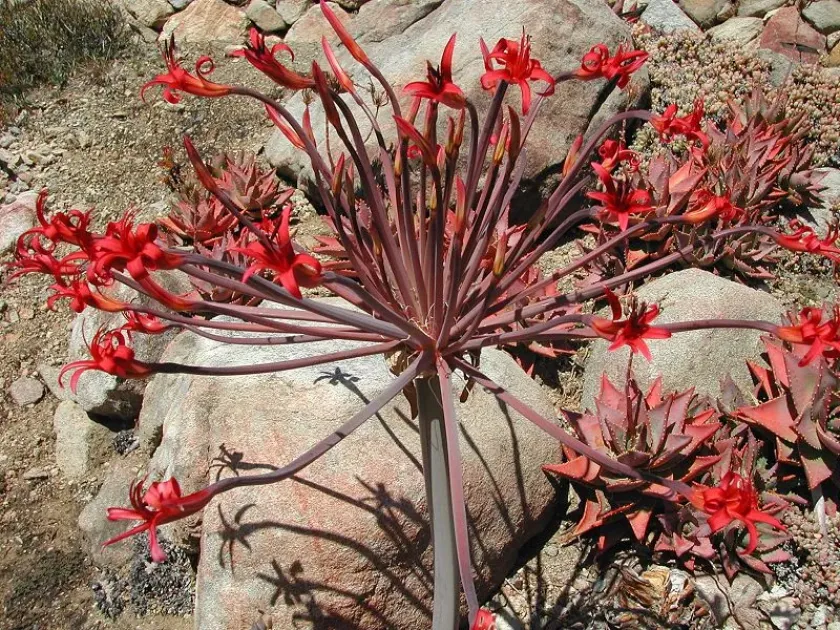
Description
Growing requirements
Brunsvigia hybrids are specialized decorative plants belonging to the Amaryllidaceae family. These plants are prized for their spectacular, large umbel-like inflorescences that emerge from dormant bulbs, often before the foliage fully develops in the growing season.
Originating from the arid regions of Southern Africa, these plants have adapted to harsh environments. Their cultivation requires a distinct climate simulation, specifically mimicking a dry, hot summer period and a cooler, moist winter or spring growing phase depending on the specific parentage.
The soil must be exceptionally well-drained and gritty. A mixture containing sand, perlite, and a small amount of organic matter is ideal. Heavy soils that retain moisture for too long are lethal, as they lead to rapid bulb decay and root rot in these sensitive species.
Proper light exposure is essential for bloom induction. Brunsvigia hybrids require full sun to thrive and store enough energy for the next flowering cycle. Inadequate light results in weak, spindly leaves and a failure to produce the characteristic dramatic floral display.
Potting requirements are also specific: the bulbs should be planted with the neck and a portion of the bulb body above the soil line. This positioning prevents stem rot and allows for better air circulation around the crown of the plant during its active growth phase.
Main diseases and pests
The most common disease affecting these bulbs is Stagonospora curtisii, commonly known as red blotch. It manifests as red streaks or spots on the leaves and bulb scales, eventually compromising the structural integrity of the entire plant if left untreated.
Pest pressure often includes mealybugs and spider mites. Mealybugs tend to congregate in the protected areas between leaves, while spider mites exploit low-humidity conditions. Routine monitoring and the use of targeted systemic pesticides are standard control practices.
Root rot caused by fungal pathogens (such as Pythium or Fusarium) remains the leading cause of loss. This is almost always triggered by overwatering or poor drainage, emphasizing the need for strict adherence to a cycle-based watering schedule.
Soil-borne pests, including fungus gnats, can damage roots in young plants. Utilizing coarse top-dressing materials like grit or gravel helps to discourage gnats from laying eggs in the surface layer of the substrate, protecting the delicate root system.
Maintaining hygiene in the greenhouse or growing area is critical. Removing decaying leaf tissue and using sanitized equipment during bulb division prevents the transmission of viral and bacterial diseases that are difficult to cure once the bulb is infected.