
Brunsvigia grandiflora
Brunsvigia grandiflora
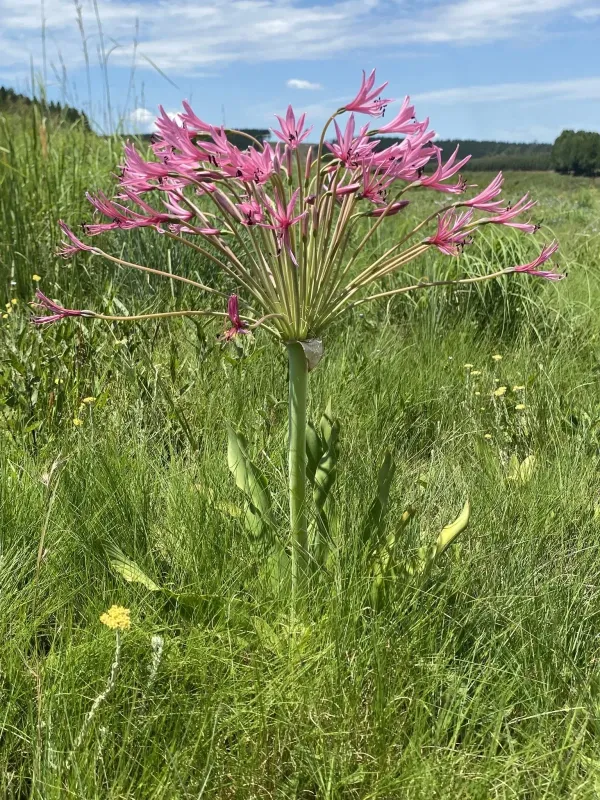
Description
Growing requirements
Brunsvigia grandiflora is a striking bulbous plant belonging to the Amaryllidaceae family, native to the arid regions of Southern Africa. This perennial is renowned for its large, magnificent inflorescences that emerge dramatically, often before the foliage appears.
The culture thrives in well-draining, sandy-loam soils that mirror its natural rocky or grassland habitat. Proper drainage is the most critical factor in its agricultural management, as the bulbs are highly susceptible to rot if subjected to waterlogged conditions.
In terms of climatic requirements, the plant necessitates a distinct cycle of growth and dormancy. During the active growing season, it requires high levels of solar radiation and moderate warmth to support the development of its fleshy leaves and future flower spikes.
During the winter dormancy period, it is essential to keep the bulb relatively dry and in a cool environment. This simulates the seasonal drought of its native climate, which is a physiological trigger required to initiate the flowering process in the following season.
The plant is typically cultivated in containers, allowing for precise control over the soil medium and moisture levels. Nitrogen-rich fertilizers should be applied sparingly during the leaf development stage to promote overall vigor without stimulating excessive vegetative growth.
Main diseases and pests
Fungal pathogens are the primary threat to Brunsvigia grandiflora, particularly those affecting the bulb and root systems. Fusarium rot and various types of blight are common when the substrate remains excessively wet for prolonged durations.
Insect pests, notably spider mites and mealybugs, frequently infest the foliage, particularly in environments with low humidity. These pests weaken the plant by draining sap, which can lead to stunted growth and reduced chances of successful flowering.
The amaryllis bulb borer or mite represents a more severe threat, capable of destroying the bulb from the inside. Early detection and the application of systemic pesticides are necessary to mitigate damage when such infestations occur.
Prevention is the best strategy for managing health; this includes sterilizing planting tools and using high-quality, pest-free potting mixtures. Ensuring adequate space between plants to allow for airflow significantly reduces the risk of fungal spread.
If a bulb shows signs of soft rot, it should be carefully inspected, the affected tissue removed, and the remaining healthy part treated with sulfur or copper-based fungicides before being repotted into fresh, dry substrate.