
Fragrant broom
Cytisus fragrans Lam.
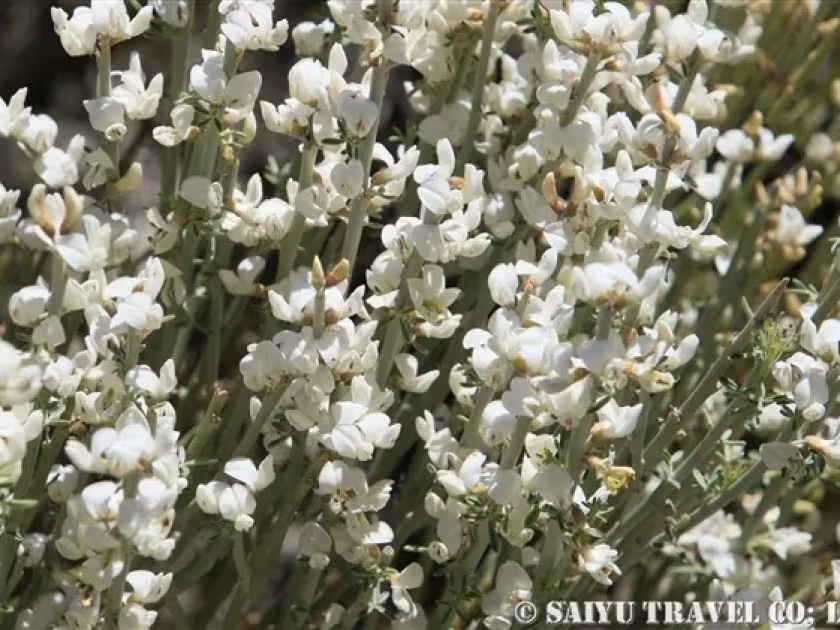
Description
Growing requirements
Fragrant broom (Cytisus fragrans) belongs to the Fabaceae family. It is a perennial deciduous shrub celebrated for its highly fragrant, bright yellow blossoms that appear during the spring season.
The plant requires full sun exposure to thrive and produce its signature flowers. Planting it in shaded locations will result in leggy growth and significantly reduced flowering density.
Soil requirements are specific: the culture prefers light, sandy, or gravelly soils with excellent drainage. Poorly draining soils lead to root hypoxia and inevitably cause root rot in this species.
This shrub is adapted to moderate fertility levels and does not require high nitrogen inputs, which is characteristic of many leguminous plants. It prefers neutral to slightly acidic soil conditions.
Proper maintenance involves seasonal pruning immediately after the flowering cycle. This ensures the shrub maintains a compact shape and prevents it from becoming woody and sparse at the base.
Main diseases and pests
The main threats to Cytisus fragrans are fungal infections, particularly powdery mildew, which is exacerbated by high humidity and poor air circulation around the shrub.
Leaf spot diseases can also occur if the foliage remains wet for extended periods. Preventive care includes ensuring proper spacing between plants and watering only the soil base.
Aphids represent a primary pest concern, especially during the spring growth phase. These insects cluster on tender new shoots, draining sap and potentially acting as vectors for plant viruses.
Leaf-eating caterpillars and moths can occasionally cause significant aesthetic damage. Regular monitoring of the foliage is essential to detect these pests before they inflict major harm.
Root rot caused by Phytophthora or other fungi is the most critical threat. Avoiding waterlogged conditions through site selection and soil amendment is the most effective defense strategy.