
Canary Island broom
Cytisus canariensis Steud.
Description
Growing requirements
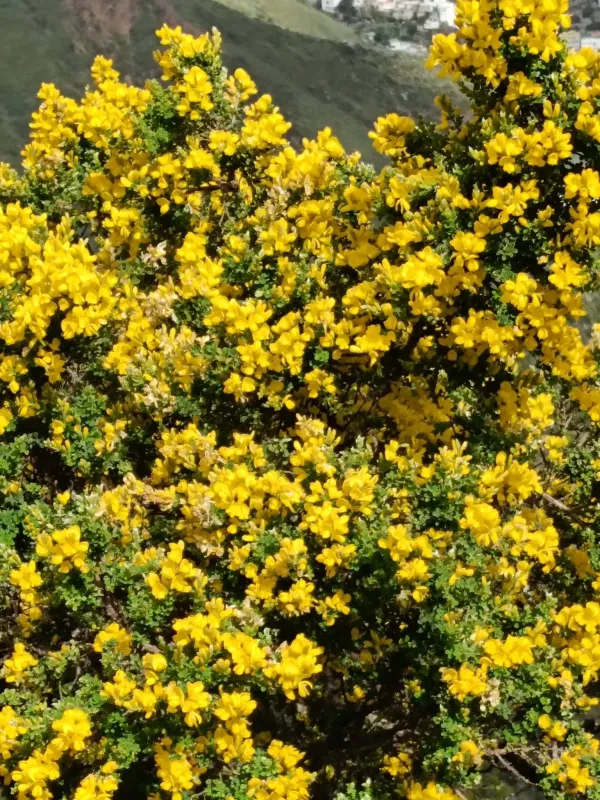
The Canary Island broom (Cytisus canariensis) is a perennial evergreen shrub belonging to the Fabaceae family. Native to the Canary Islands, this species is widely recognized for its profuse, fragrant yellow flowers and slender, branching habit.
Regarding cultivation requirements, the plant thrives in full sun but prefers some light protection from intense afternoon heat in warmer climates. It is highly valued as an ornamental specimen in gardens and indoor settings where it can be grown in large containers.
The soil should be well-drained and slightly acidic to neutral. High-quality potting mixes with added perlite or grit are recommended for container-grown specimens to ensure sufficient aeration and to prevent the roots from remaining waterlogged.
Agrotechnical maintenance involves regular pruning after the flowering season to manage the plant's size and encourage a fuller, more compact structure. Without consistent pruning, the shrub tends to become leggy and loses its attractive ornamental shape.
Climatic requirements are specific to Mediterranean or subtropical environments. As it is not frost-hardy, in cooler regions, the plant must be brought indoors during winter months to a cool, bright location where temperatures remain above freezing.
Main diseases and pests
Canary Island broom is prone to infestations of spider mites and scale insects, which frequently occur in indoor environments due to poor air circulation and dry conditions.
Root rot remains the most significant disease threat, typically caused by overwatering or soil that lacks proper drainage, which compromises the integrity of the root system.
To mitigate pest pressure, growers should monitor the plant closely and use appropriate horticultural oils or systemic insecticides when outbreaks are detected on the foliage.
Cultural practices to prevent diseases include allowing the top inch of soil to dry out between waterings and ensuring that the container has adequate drainage holes.
Fungal infections such as powdery mildew may occasionally appear if humidity levels are high and light levels are low, necessitating a move to a better-ventilated area.