
Tasselflower
Brickellia grandiflora
Description
Growing requirements
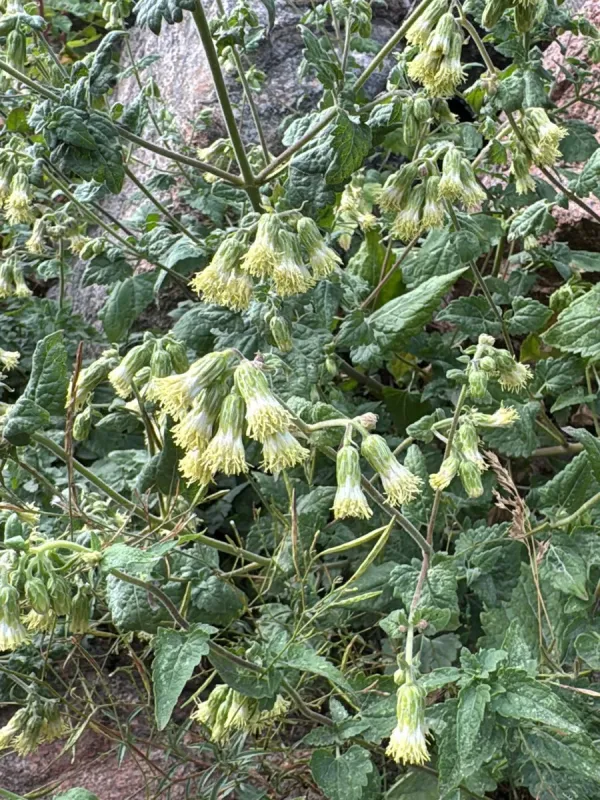
Brickellia grandiflora, commonly known as Tasselflower, is a herbaceous perennial belonging to the Asteraceae family. It is native to the western parts of North America, where it thrives in rocky terrain, open woodlands, and canyons.
The plant requires well-draining soil to perform optimally. It is particularly well-suited for xeriscaping or areas with poor nutrient profiles, as it has evolved to survive in lean, rocky, or gravelly substrates.
In terms of climate, it is a drought-tolerant species once established. It thrives in full sun but can tolerate partial shade, making it a versatile choice for various landscape positions in temperate and semi-arid zones.
Botanically, the plant features erect stems and alternate, deltoid-shaped leaves. Its most distinctive feature is the tubular florets that gather into creamy-white or pale yellow flower heads, appearing during late summer and autumn.
Agriculturally and horticulturally, Tasselflower serves as an excellent pollinator-friendly plant. It is primarily used in ecological restorations and ornamental landscaping where low-maintenance, native species are preferred.
Main diseases and pests
The primary concern for growers is root rot, which occurs if the plant is subjected to poor soil drainage or excessive moisture. It is crucial to ensure that the site does not retain standing water during the dormant season.
The species is remarkably resilient against common insect pests. There are no major disease outbreaks associated with this plant, provided that standard spacing is maintained to ensure proper air circulation around the foliage.