
Brickellia cavanillesii
Brickellia cavanillesii
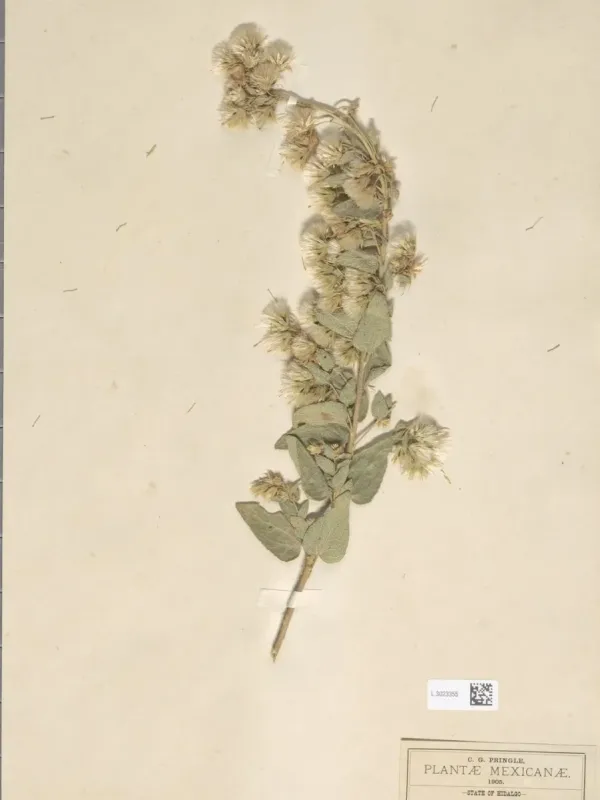
Description
Sowing dates
Brickellia cavanillesii is a perennial herbaceous plant belonging to the Asteraceae family. It is known for its adaptation to arid and semi-arid environments, making it a unique candidate for specific agricultural regions.
Sowing should be performed in early spring once soil temperatures reach a stable level. Seeds require light to germinate, so they should be surface-sown or covered with a very thin layer of substrate.
Optimal germination occurs under controlled greenhouse conditions with consistent humidity levels. Once seedlings reach a height of 5–10 cm, they are ready for hardening off before field transplantation.
Spacing is crucial for this crop to prevent overcrowding and ensure adequate airflow. Recommended planting distance is approximately 30–40 cm between individual plants in rows.
Succession planting can be practiced in warmer climates, though one main spring sowing usually provides the best yields for biomass harvest in the first season.
Growing requirements
This species thrives in well-draining, sandy-loam soils. It is highly intolerant of waterlogged conditions, which can lead to root rot and complete failure of the crop stand.
Full sun exposure is a mandatory requirement for the development of healthy biomass. At least 6–8 hours of direct sunlight per day are needed to stimulate the production of secondary metabolites.
The plant is highly drought-tolerant, exhibiting physiological mechanisms to conserve water. During the hottest months, supplemental irrigation should be applied sparingly to avoid over-saturation.
Soil pH levels should ideally range between 6.5 and 7.5. Periodic testing is recommended to ensure that the nutrient profile supports steady growth without excessive nitrogen application.
Mulching is highly beneficial for this crop, as it keeps the root zone cool during the summer heat and suppresses competitive weed growth in the early stages of establishment.
Main diseases and pests
Pest management for Brickellia cavanillesii primarily involves monitoring for aphids and spider mites, which are attracted to the soft green tissues of the plant during dry spells.
Powdery mildew represents the most significant fungal risk. To mitigate this, practitioners should ensure wide row spacing and remove any infected foliage immediately upon detection.
Root-knot nematodes can occasionally affect the crop in soils where previous sensitive plants were grown. Maintaining a proper crop rotation cycle is essential to manage soil health.
Insects like leafhoppers may also cause damage by transmitting viral infections. Using physical barriers like insect netting can be an effective non-chemical control measure.
If chemical treatments are necessary, they must be applied early in the season to ensure that residues do not remain on the leaves at the time of harvesting for medicinal use.
Harvesting
Harvesting should be conducted at the peak of the flowering stage, as this is when the concentration of essential chemical compounds is at its highest point.
The stems should be cut cleanly using disinfected garden shears. It is best to harvest in the morning after the dew has evaporated but before the heat of the day reaches its peak.
The cut biomass should be spread in thin layers in a shaded, well-ventilated area for drying. Avoid stacking the fresh plants to prevent the onset of fermentation or mold.
Drying is complete when the leaves and stems are brittle enough to snap when bent. This process usually takes 5 to 10 days depending on local environmental humidity.
Once dried, the product should be stored in breathable paper bags or airtight containers in a cool, dark environment to maintain its potency for extended periods.