
Brachylaena neriifolia
Brachylaena neriifolia
Description
Growing requirements
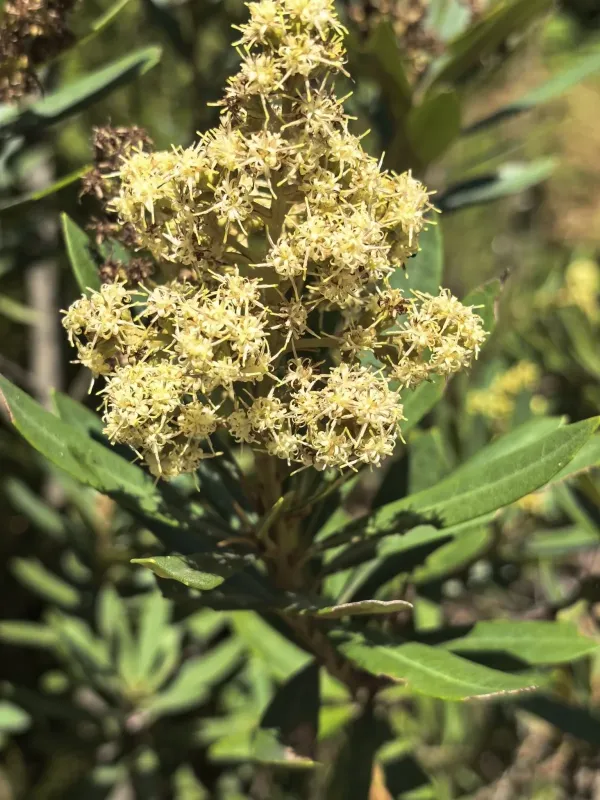
Brachylaena neriifolia, commonly known as the Water-bessie, is a robust evergreen shrub or small tree belonging to the Asteraceae family. It is distinguished by its leathery, lance-shaped leaves that possess a silvery-green appearance, resembling those of the oleander plant.
The species is native to South Africa, specifically found growing along riverbanks and in riparian zones. This botanical origin dictates its preference for moisture-retentive soils and its natural tolerance to areas that experience periodic flooding or high water tables.
Regarding cultivation requirements, the plant thrives in full sun but maintains healthy growth in partial shade. It is highly adaptable to various soil types, including sandy, loamy, and rocky substrates, provided they are not excessively compacted and offer moderate drainage.
In terms of climate, Brachylaena neriifolia is well-suited to Mediterranean-type climates with mild winters. While established plants can withstand occasional light frost, they should be protected from harsh, prolonged freezing conditions which might damage terminal buds.
The agricultural and economic utility of this plant is diverse. It is widely valued for erosion control due to its extensive root system, and its durable wood is traditionally utilized in crafting sturdy handles and various small carpentry items.
Main diseases and pests
Pest issues are generally minimal, though the plant can occasionally host aphid populations during the peak growth season. These pests typically cluster on new growth and can be managed through natural predators or focused horticultural oil applications.
Fungal diseases are rare but can occur if the shrub is planted in stagnant, poorly ventilated areas. Ensuring proper spacing between individual plants and avoiding overhead irrigation in humid conditions significantly reduces the risk of leaf blight and mildew.