
Brachylaena discolor
Brachylaena discolor
Description
Growing requirements
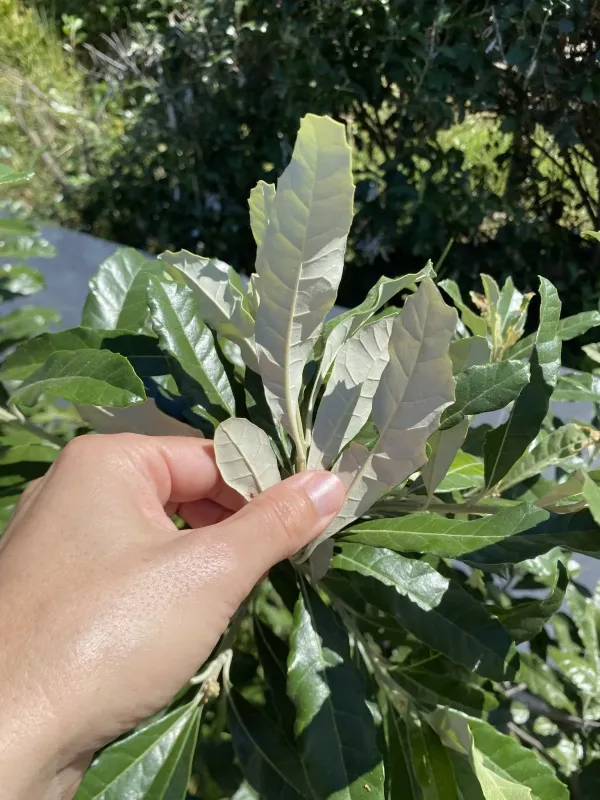
Brachylaena discolor, commonly known as the coastal silver oak, is a robust evergreen tree belonging to the Asteraceae family. It is characterized by its distinct foliage, which displays a vibrant green upper surface and a dense, silvery-white tomentum on the underside.
This species is native to the coastal regions of Southern Africa, where it thrives in diverse environments ranging from dunes to coastal forests. Due to its natural habitat, the plant has evolved a high tolerance to salt spray and wind, making it an excellent candidate for coastal stabilization and windbreaks.
To cultivate Brachylaena discolor successfully, one must provide a sunny location with well-draining soil. The tree is remarkably hardy once established, tolerating periods of drought; however, it thrives best in deep, fertile soils with consistent moisture levels during the early growth stages.
Agronomic management involves regular monitoring of soil fertility and appropriate spacing to accommodate the tree's dense, branching growth habit. It is essentially a tropical and subtropical plant, requiring protection from frost, which can cause significant tissue damage or mortality in young specimens.
The economic utility of the tree is substantial, primarily centered around its high-quality timber. The wood is exceptionally hard, durable, and resistant to termites, making it highly desirable for heavy-duty construction, fencing, tool handles, and high-quality charcoal production.
Main diseases and pests
Brachylaena discolor is generally resistant to most common agricultural pests and diseases due to its dense wood properties and resilient physiological makeup. Most health issues arise from improper soil aeration, which can lead to root system decay in heavy or waterlogged clay soils.
Insect pests are primarily limited to occasional infestations of foliage-feeding larvae that can affect young seedlings. Disease management should focus on maintaining a balanced irrigation schedule and ensuring sufficient air circulation to prevent the onset of fungal leaf spots or powdery mildew in humid environments.