
Bouvardia longiflora
Bouvardia longiflora (Cav.) Kunth
Description
Growing requirements
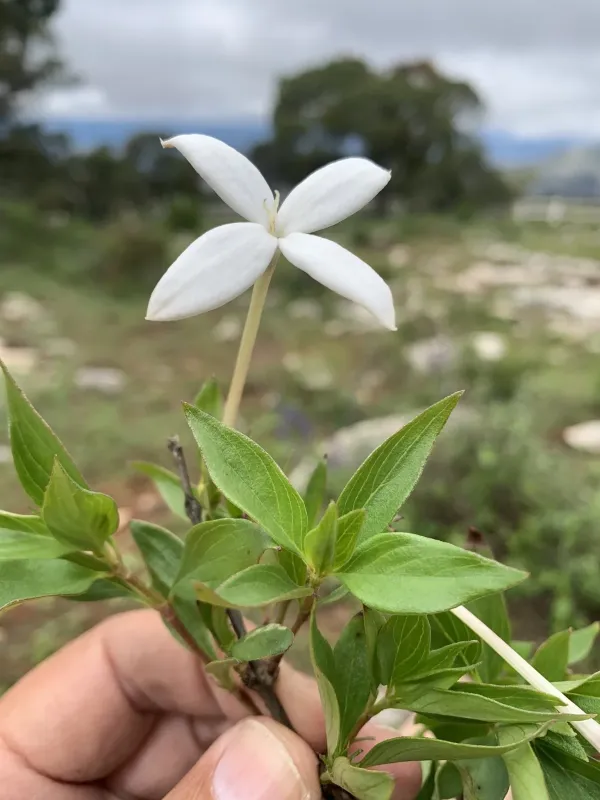
Bouvardia longiflora belongs to the Rubiaceae family and is native to the tropical landscapes of Mexico. This evergreen shrub is highly valued for its fragrant, long-tubed white flowers that appear in clusters.
The plant features opposite lanceolate leaves and a woody stem structure. Botanically, it is classified as a semi-shrub that requires controlled environmental conditions for optimal health.
It thrives in bright, indirect light. Direct sunlight can cause scorching, while insufficient light levels will significantly reduce floral production during the blooming season.
Soil requirements include a well-drained, porous growing medium. A blend of peat, perlite, and organic compost maintains the slightly acidic pH preferred by this species.
Climate control is crucial, with an ideal temperature range of 18 to 24 degrees Celsius. During winter, a dormancy period at cooler temperatures is necessary to stimulate future flower bud development.
Main diseases and pests
Common pests include aphids and whiteflies, which tend to congregate on the underside of leaves. These insects can weaken the plant by extracting essential sap.
Spider mites are a persistent threat in environments with low humidity. They cause stippling on the leaves and can lead to early senescence if left untreated.
Root rot is the most common disease, often resulting from overwatering or poorly draining soil substrates. It quickly leads to the death of the root system.
Powdery mildew can occur if air circulation is poor, manifesting as white dust on the foliage. Proper spacing between plants helps to mitigate this fungal issue.
Regular inspection and the use of integrated pest management practices are recommended to keep the plant healthy and productive throughout the year.
Harvesting
Harvesting for floral use involves cutting stems when the majority of flower clusters have opened. This stage ensures the best aesthetic value for floral arrangements.
Stems must be cut at a sharp angle to improve water absorption. It is critical to place the flowers in clean water immediately after harvesting to prevent wilting.
Post-harvest care includes removing lower foliage to prevent decomposition within the vase. The water should be changed regularly to inhibit bacterial growth.
Pruning is a vital maintenance task performed after the flowering phase. Removing spent blooms and shortening stems encourages bushier growth for the next season.
Proper management of the harvest cycle ensures that the mother plant remains vigorous and continues to produce high-quality blooms in subsequent years.