
Deane's Boronia
Boronia deanei
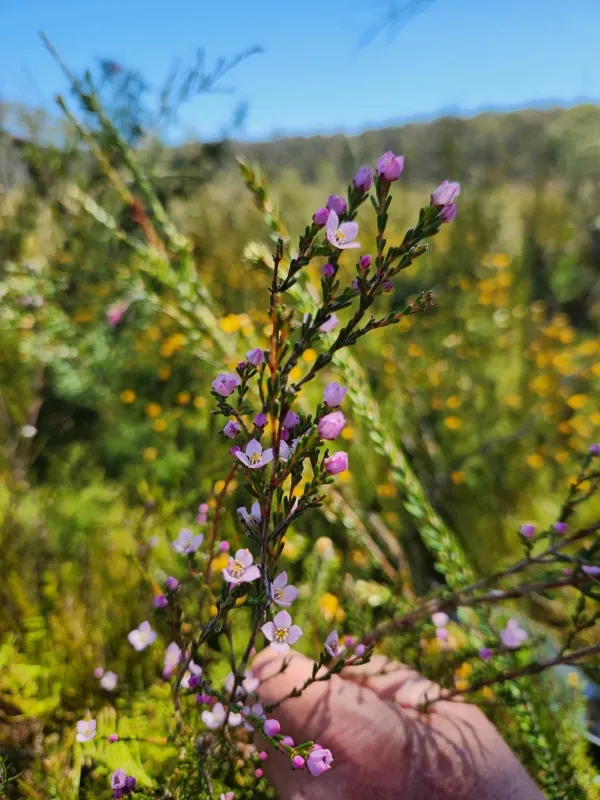
Description
Growing requirements
Boronia deanei, commonly known as Deane's Boronia, is an evergreen shrub belonging to the Rutaceae family. It is native to the wet heathlands and sub-alpine regions of New South Wales, Australia, where it thrives in moist, well-drained habitats near watercourses or marshy areas.
The cultivation of this species requires a strict adherence to its environmental preferences. It thrives best in acidic, well-draining soils rich in organic matter. Gardeners must ensure that the planting site offers a cool root run, often achieved through organic mulching, which helps stabilize soil temperature and moisture levels.
Exposure to full, direct sun can be detrimental to Boronia deanei. In a garden setting, it performs best in partial shade where it receives filtered light. Excessive heat and drying winds are significant stressors, thus protection from extreme weather conditions is essential for successful growth.
Agrotechnical management involves consistent watering to maintain soil moisture without allowing water to pool. It is critical to note that Boronia species are sensitive to phosphorus, so specialized, low-phosphorus fertilizers meant for native Australian plants should be used sparingly if fertilization is deemed necessary.
While primarily an ornamental plant, its elegant habit and aromatic foliage make it a desirable addition for temperate gardens or as a greenhouse specimen. Proper pruning after the flowering season encourages a bushier structure and prevents the plant from becoming overly woody and sparse over time.
Main diseases and pests
The primary threat to Boronia deanei is root rot, particularly caused by Phytophthora species. This pathogen thrives in saturated soils and can destroy the root system rapidly. Preventative measures include using excellent drainage substrates and avoiding over-irrigation.
Insect pests such as spider mites and mealybugs can become problematic, particularly when humidity levels are low. These pests typically cluster on the undersides of leaves or in leaf axils, causing discoloration and stunted growth if left unmanaged.
Scale insects represent another common threat to the health of Boronia shrubs. They feed on plant sap, and their presence can lead to the development of sooty mold, which impairs photosynthesis and reduces the overall vigor of the shrub.
Physiological disorders, such as interveinal chlorosis, often indicate an incorrect pH level or poor uptake of essential micronutrients. Maintaining the soil acidity is crucial for the efficient absorption of minerals required for healthy development.
Integrated pest management (IPM) is highly recommended. This includes maintaining plant hygiene, regular inspection, and the application of horticultural oils or biological controls rather than harsh, broad-spectrum chemical treatments, to which the plant may be sensitive.