
Anise-scented boronia
Boronia crenulata
Description
Growing requirements
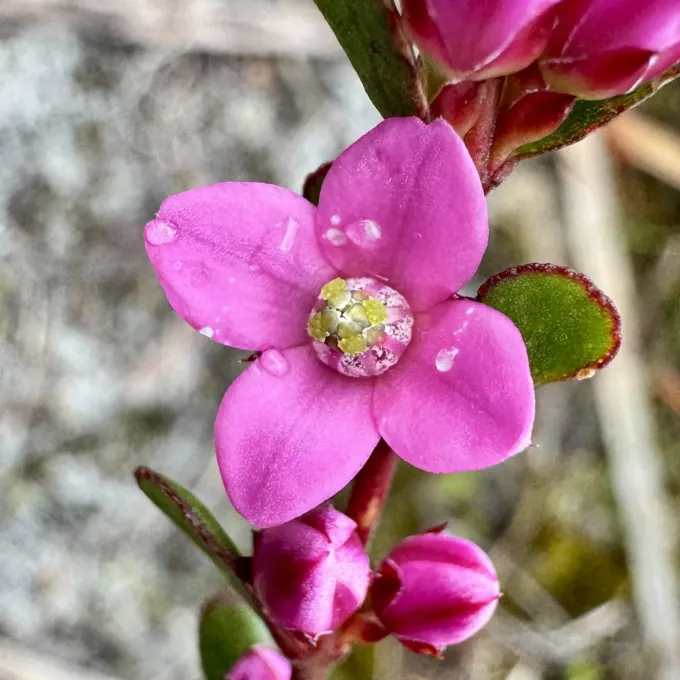
Boronia crenulata, commonly known as the anise-scented boronia, is an evergreen shrub belonging to the Rutaceae family. It is native to the southwest regions of Western Australia, where it thrives in diverse heathland environments characterized by specific soil profiles.
The plant is highly regarded for its attractive, small pink or white flowers and aromatic foliage. It requires a temperate climate with consistent moisture levels. Maintaining a balance in irrigation is crucial, as the plant suffers from both drought stress and waterlogged roots.
To ensure healthy growth, the plant requires acidic, well-draining soil rich in organic matter. A mixture of peat and sand is often recommended for container cultivation. It thrives in bright, indirect light, as exposure to harsh afternoon sun can lead to leaf necrosis and overall plant decline.
Proper airflow is a vital requirement for the health of Boronia crenulata, especially when grown indoors or in greenhouses. Keeping the ambient temperature between 15 and 22 degrees Celsius is ideal for promoting consistent blooming and preventing physiological stress on the shrub.
In terms of хозяйственное use, this plant is primarily grown as an ornamental shrub for residential gardens in mild climates or as a container plant. Its aesthetic value and scent make it a desirable choice for specialized floral collections and ornamental landscape gardening.
Main diseases and pests
The most common pests affecting this species include spider mites and mealybugs, which tend to proliferate in dry indoor environments. Additionally, improper drainage or excessive soil moisture often triggers fungal root rot, which is one of the leading causes of plant loss in cultivation.