
Blyxa shimadai
Blyxa shimadai
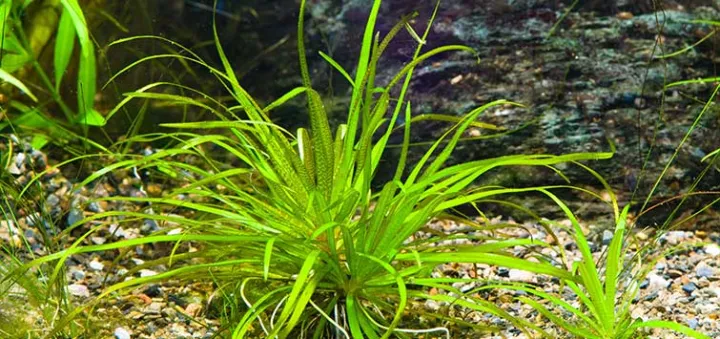
Description
Growing requirements
Blyxa shimadai is a freshwater perennial plant belonging to the Hydrocharitaceae family. In its natural habitat, which spans East Asian regions including Japan and Taiwan, the plant is typically found in marshy areas and shallow stream margins.
For successful cultivation, a high level of lighting is required to stimulate photosynthesis and maintain the plant's characteristic compact, bushy form. Intense light promotes the development of vibrant golden and reddish hues, increasing the plant's ornamental value.
Optimal water parameters involve soft to medium hardness, and the injection of carbon dioxide (CO2) is crucial for this species. Without adequate CO2 levels, growth slows significantly, and the foliage loses its color and structural integrity.
The plant thrives in nutrient-rich substrates, as its root system is highly efficient at absorbing essential minerals. When planting, it is necessary to use a fine to medium-grade substrate that allows roots to penetrate easily and access nutrients effectively.
The temperature range should be consistently maintained between 22 and 28 degrees Celsius. Avoiding sudden fluctuations in water chemistry or temperature is vital, as the species is sensitive to instability, which can lead to stunted growth or leaf degradation.
Main diseases and pests
A primary threat to this culture is the overgrowth of filamentous algae, which can outcompete the plant for light and nutrients. Maintaining a strict biological balance is the most effective way to prevent algal outbreaks.
Leaf necrosis on older foliage is a common issue often caused by a deficiency in macronutrients such as nitrogen or phosphorus. Systematic fertilization with comprehensive aquatic plant food is necessary to prevent mass loss.
Certain species of snails can act as pests by grazing on the tender shoots of Blyxa shimadai, requiring close monitoring and population control. Excessive sediment compaction can also hinder root respiration, leading to plant decay.
The accumulation of heavy metals in the water column can trigger chlorosis, characterized by yellowing and subsequent death of leaf tissue. Regular water changes of 30-50% per week are essential to maintain the health of the cultivation environment.
Improper lighting duration or intensity often leads to etiolation, where the plant stems elongate and lose their compact aesthetic. While not a disease, it is a significant defect that diminishes the quality of the planting material for aquascaping purposes.