
Coojong
Acacia saligna (Labill.) H. L. Wendl.
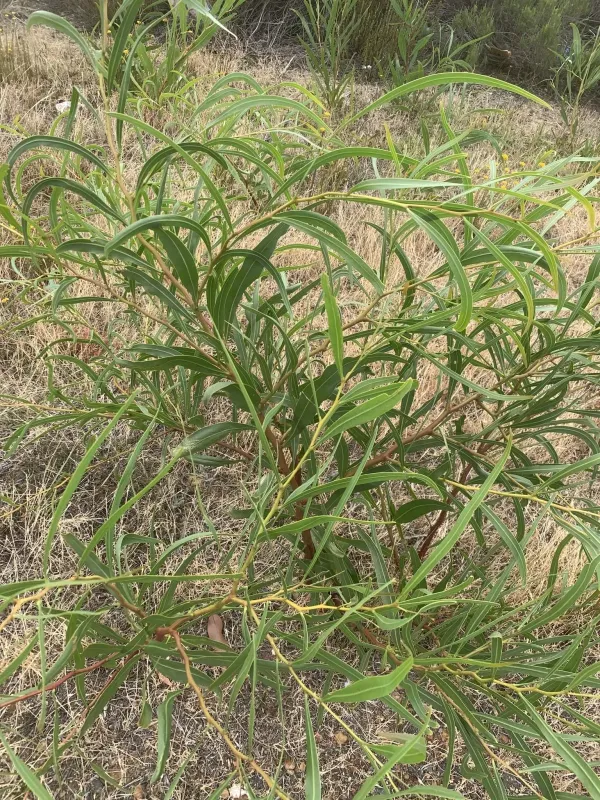
Description
Sowing dates
Sowing of Coojong (Acacia saligna) is typically performed in spring when soil temperatures allow for active germination. Seeds possess a hard coat and must undergo scarification, such as hot water treatment or mechanical abrasion, to ensure uniform sprouting.
In nursery settings, seeds are sown into well-drained, sterile substrates. Consistent moisture is required during the initial growth phase, but seedlings should be hardened off before final transplanting to the field.
Planting density is determined by the intended outcome, whether for windbreaks or biomass production. A spacing of 2 to 3 meters is generally recommended to allow sufficient room for root development and crown expansion.
Containerized seedlings are preferred for site restoration projects as they show superior survival rates compared to direct sowing in arid or degraded soils.
Early-stage growth is very rapid, providing quick coverage for soil stabilization. Monitoring seedling health during the first few months is essential to ensure a successful plantation start.
Growing requirements
Acacia saligna is a member of the Fabaceae family, native to Western Australia. It is highly valued for its exceptional adaptability to diverse environmental conditions, including poor, sandy, and alkaline soils.
This species is highly light-demanding and requires full sun exposure for optimal development. Reduced light levels lead to poor canopy density and decreased flowering performance.
The culture is extremely drought-tolerant and can thrive in regions with low annual precipitation. While it withstands high summer temperatures, it is sensitive to severe and prolonged frost events, which can damage younger stems.
It thrives in a wide range of soil pH levels. Its ability to fix atmospheric nitrogen through symbiotic bacteria makes it an excellent choice for improving nutrient-deficient soils in agricultural projects.
Proper soil drainage is vital. The species does not tolerate waterlogging, as excessive soil moisture promotes root rot and negatively impacts tree health and vigor.
Yield
The primary economic use of Acacia saligna is the production of biomass, which serves as a renewable fuel source or feedstock for charcoal production. Its rapid growth cycle allows for harvests every few years.
In silvopastoral systems, the foliage is utilized as emergency fodder for livestock during periods of feed scarcity. However, consumption should be managed due to the presence of tannins in the leaves.
The species acts as a valuable honey plant, providing nectar resources for bees. Beekeeping productivity is influenced by local climate factors and the density of flowering stands in the vicinity.
Acacia saligna is extensively utilized in land rehabilitation, specifically for stabilizing disturbed sites and mine tailings. Its nitrogen-fixing properties aid in long-term soil health improvement.
Biomass yields are generally maximized in sites where root systems can access deep water tables, even if surface irrigation is absent during the dry season.
Main diseases and pests
Fungal diseases, including rusts and various leaf spots, represent the main threat, especially in humid conditions. Managing stand density is the most effective cultural practice to reduce infection risks.
Insect pests like aphids and scale insects may attack developing shoots. Integrated pest management using biological controls is recommended to maintain tree health without relying solely on chemical treatments.
In some regions, Acacia saligna is considered an invasive species due to its prolific seeding and rapid spread. Effective management involves monitoring and limiting its expansion into sensitive natural habitats.
Stem damage caused by mechanical equipment can introduce secondary infections. Careful maintenance practices are necessary to ensure the longevity of the trees in commercial plantations.
Monitoring the soil for moisture extremes is critical, as prolonged stress from drought or flooding significantly increases susceptibility to various opportunistic pathogens.