
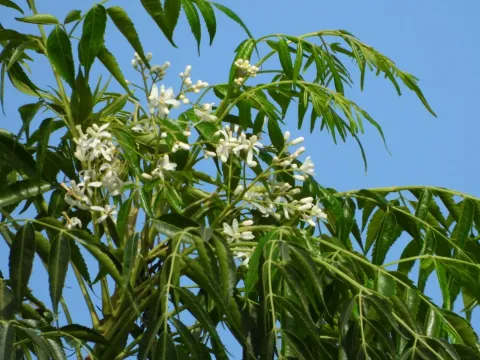
Neem
Azadirachta A. Juss.
Neem (Azadirachta indica) is a member of the Meliaceae family, renowned for its incredible hardiness in tropical and subtropical regions. This evergreen tree can reach heights of up to 30 meters, possessing a deep taproot that makes it exceptionally drought-resistant once established.
What the section contains

Neem
The tree thrives in temperatures ranging from 20°C to 40°C and is quite adaptable regarding altitude, though it prefers frost-free environments. It requires significant sunlight for optimal growth and can tolerate poor, sandy, or saline soils where other species might fail.
In terms of soil, neem is not overly demanding; however, it grows best in well-drained, fertile loamy soils. It cannot tolerate waterlogging, as excessive moisture often leads to root rot, which is the most common cause of plantation failure in humid regions.
Standard agrotechnical practices for neem involve regular weed control during the seedling stage to minimize competition for nutrients. Once the trees mature, they develop a wide canopy that naturally suppresses undergrowth, reducing the need for constant maintenance.
Planting density depends on the primary goal; if the tree is grown for timber, closer spacing is used, whereas fruit-bearing orchards require wider spacing, typically 10 meters apart, to ensure sufficient airflow and light penetration for every branch.
Common pests affecting neem include scale insects and mealybugs, which can cluster on the undersides of leaves and young stems. These pests can be managed through the application of organic horticultural oils, which have minimal impact on the local ecosystem.
Fungal diseases like leaf spot and powdery mildew may appear during periods of high humidity or poor ventilation. Proper pruning practices are essential to open up the canopy and encourage air circulation, thereby limiting the development of fungal spores.
Damping-off is a significant risk for young nursery seedlings. To prevent this, it is crucial to use sterile soil mixes and ensure that water is applied only to the base of the plant, preventing excessive moisture on the foliage or stem surface.
Tree borers can occasionally damage the trunks of older trees, weakening their structural integrity. Regular monitoring and filling of holes with natural sealants can help prevent secondary infections that might lead to severe tree decay.
Integrated pest management strategies are highly effective for neem, as the tree’s own extracts can be used to treat early signs of infestation. This cyclical self-protection mechanism makes neem one of the most sustainable crops to manage in organic agriculture.
The economic value of neem is vast, as every part of the tree serves a specific purpose. It is widely known in agriculture for producing oil that functions as a natural insect repellent and biopesticide, highly prized in organic farming systems.
The leaves are harvested for their therapeutic and medicinal properties, often processed into extracts or powders used in skincare, cosmetics, and traditional medicine. Their antiseptic and antifungal qualities are well-documented in botanical literature.
Neem timber is highly valued in the construction and furniture industries. Because the wood is naturally resistant to termites and other wood-boring insects, it is an ideal choice for manufacturing agricultural tools, cabinets, and structural beams.
Harvesting usually begins when the tree is 3 to 5 years old. The yellow, ripened fruits are collected from the ground or picked from the branches. After collection, the pulp is removed, and the seeds are thoroughly dried to preserve their chemical compounds.
The processing of neem seeds involves cold-pressing to extract the crude oil, which is then refined for various industrial or agricultural applications. This harvesting cycle provides a consistent source of income for farmers in arid and semi-arid zones.