
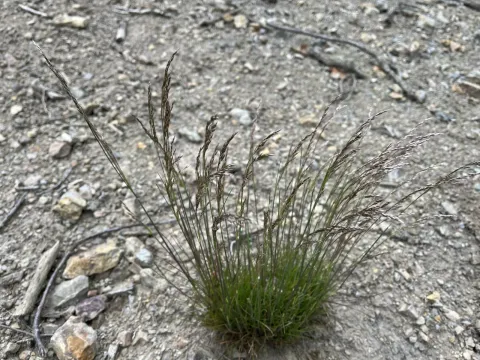
Wavy hair-grass
Avenella Bluff ex Drejer
Wavy hair-grass (Avenella flexuosa), often referred to as Deschampsia flexuosa, is a perennial grass species belonging to the Poaceae family. It is recognized for its fine, thread-like leaves and delicate, arching flower panicles.
What the section contains

Wavy hair-grass
This grass is native to a broad range of habitats across the Northern Hemisphere, including subarctic, temperate, and tropical mountain regions. It is highly adapted to nutrient-poor, acidic soils, making it a pioneer species in challenging environments.
Botanically, Avenella flexuosa is characterized by its tufted growth habit and ability to withstand significant environmental stress. Its roots are finely branched, allowing it to efficiently extract nutrients from thin or degraded substrates.
The plant thrives in cool, moist climates and is highly tolerant of shade, often found in heathlands, open woodlands, and rocky slopes. It demonstrates excellent cold hardiness, surviving harsh winter temperatures without damage.
While not a primary crop for intensive agriculture, it is increasingly used in ecological restoration, erosion control on acidic slopes, and as a specialized ornamental plant in naturalistic garden design.
The primary health threats for Avenella flexuosa include fungal infections such as rust and leaf spot diseases, which typically flourish in conditions of stagnant air and high humidity.
Invertebrate pests, including various aphids and mining insects, can occasionally impact the vitality of the grass stands, although the species is generally resilient to herbivore pressure.
Environmental changes, particularly the neutralization of acidic soils through excessive liming, can inhibit growth, as the plant is specifically adapted to a low-pH soil environment.
Overgrazing by livestock can lead to the thinning of the grass tufts, potentially allowing invasive opportunistic weeds to take over the habitat.
Maintaining the site's ecological integrity is the best prevention strategy, as the plant remains naturally robust when growing in conditions that favor its specific biological requirements.