
Aureolaria laevigata
Aureolaria laevigata
Description
Growing requirements
Aureolaria laevigata, commonly known as the smooth false foxglove, is a perennial herbaceous plant belonging to the Scrophulariaceae family. It is distinct for its hemiparasitic lifestyle, relying on specific host plants.
The plant thrives by attaching its roots to the root systems of various oak tree species via haustoria. This specialized biological connection allows the plant to extract essential minerals and fluids from its host.
The native range of this species is confined to the eastern and central regions of the United States. It favors well-drained, acidic forest soils found in hardwood stands or clearings.
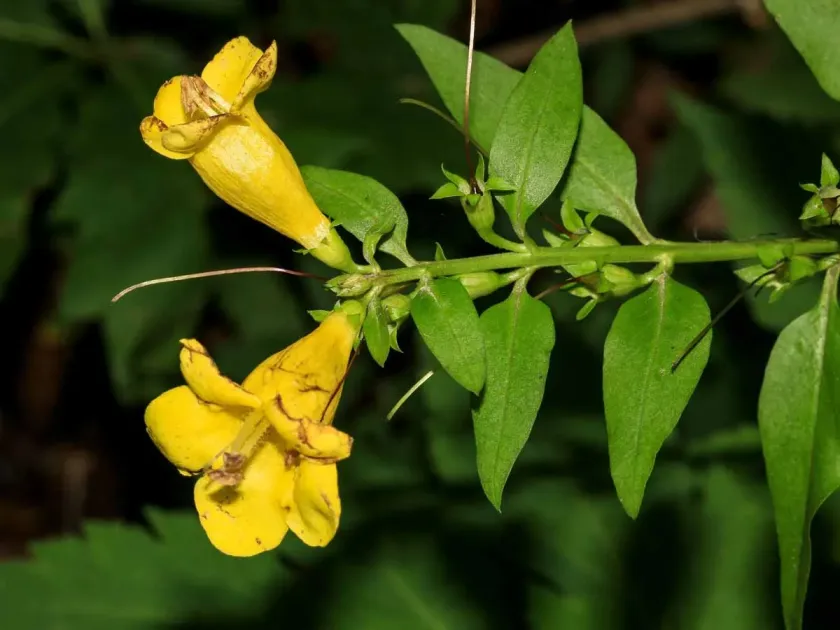
Botanically, the plant is identified by its smooth, hairless stems and opposite leaves. During the blooming season, it produces showy, bright yellow flowers that are bell-shaped.
Due to its complex symbiotic requirements and reliance on woody hosts, the species is not cultivated for agricultural purposes and is rarely found in traditional garden settings.
Main diseases and pests
The primary threat to Aureolaria laevigata populations is habitat destruction, particularly the loss of mature oak forests which serve as its mandatory host species.
Soil disturbances and the introduction of invasive species can alter the underground network of root interactions, effectively starving the parasite.
Insects that specialize in feeding on Scrophulariaceae can impact individual health, although environmental degradation remains the leading cause of population decline.
Fungal infections may develop in moist, poorly aerated soils, which can rot the root structures and damage the connection between the plant and the host.
Overall, the species is sensitive to fragmentation of wild habitats, which limits the dispersal of seeds and the ability to establish new parasitic colonies.