
Astilbe taquetii
Astilbe taquetii
Description
Sowing dates
Astilbe taquetii is a perennial herbaceous plant belonging to the Saxifragaceae family. In professional horticulture and ornamental gardening, the propagation of this crop is most commonly performed through vegetative methods, specifically the division of rhizomes.
The optimal time for dividing the clump and transplanting the propagation material is spring, during the early active growth phase when buds are just beginning to break dormancy. Late August or September is also an acceptable time, allowing the plant to establish itself before the onset of persistent frosts.
Propagation by seed is used less frequently because the seeds of Astilbe are extremely small, require prolonged stratification, and do not always maintain the varietal characteristics of the parent plant. When sowing in containers, seeds are distributed over the moist substrate surface without being buried.
Planting divisions in open ground is done at a depth of 3–5 centimeters so that the growth point remains slightly below the soil level. A spacing of 40 to 60 centimeters should be maintained between plants to ensure proper air circulation.
An essential stage of preparation for planting is enriching the soil with organic fertilizers, such as well-rotted compost or peat, which promote the rapid development of the perennial's powerful root system.
Growing requirements
The plant originates from East Asian regions, including the Korean Peninsula and parts of China, and is adapted to temperate climate conditions with sufficient moisture levels. The crop prefers semi-shaded areas with protection from direct mid-day sunlight.
Soil requirements for this crop include high water-holding capacity and sufficient nutrients. Astilbe taquetii performs best in loamy, slightly acidic soils with good drainage, as waterlogging can trigger rhizome rot.
Watering is a critical element of the agricultural practice, especially during the formation of flower spikes and the flowering phase. In hot, dry periods, regular irrigation must be provided, as the plant is highly sensitive to the drying out of the root ball.
To maintain optimal soil moisture, mulching the root zone with peat, wood chips, or bark is recommended. This also helps suppress weed growth and prevents overheating of the root system during summer.
The species is quite winter-hardy; however, in northern regions with low snow cover, light protection of the clumps with evergreen boughs or dry leaves is recommended to prevent damage to young dormant buds from severe frost.
Yield
The commercial use of Astilbe taquetii is concentrated in ornamental horticulture, park landscaping, and garden design. The species is valued for its high ornamental quality, defined by its powerful, upright flower spikes reaching heights of up to 100–120 centimeters.
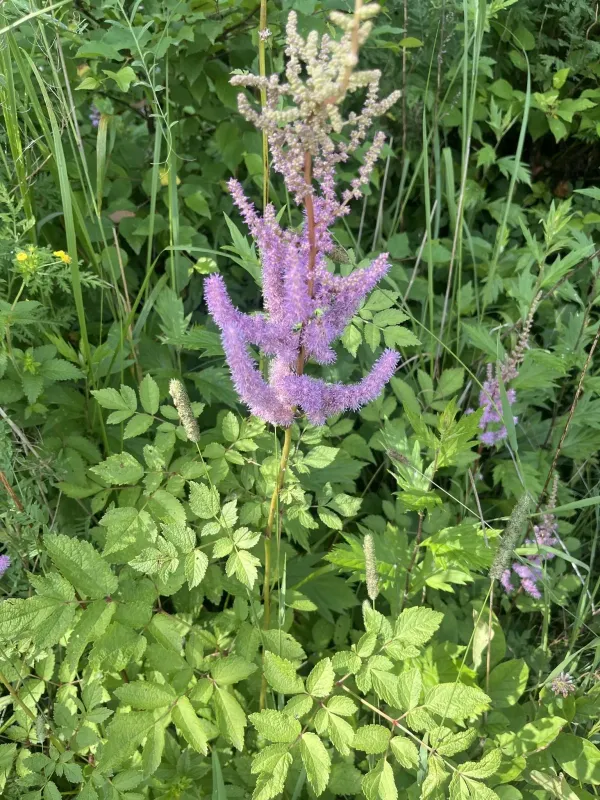
The flowering period occurs in the second half of summer when the plant produces dense, paniculate inflorescences in vibrant purple or pinkish-lilac shades. This makes the crop highly sought after for creating continuous-blooming flower beds.
In commercial gardening, Astilbe taquetii is used for forcing, as well as a cut flower material, although its vase life depends on the development stage at the time of harvesting. The productivity of a single clump, with proper care, yields high-quality material for further propagation.
The plant has good tolerance for air pollution, making it suitable for urban landscaping in mixed borders. Group planting allows for a striking visual impact thanks to its beautiful, deeply cut foliage.
To maintain high flowering yields, rejuvenating division of the clump every 4–5 years is necessary, as older rhizomes gradually become exposed and lose their flowering intensity.
Main diseases and pests
The primary threat to the crop is nematodes, which attack the root system and leaves, leading to shoot deformation and stunted growth. Any infested specimens must be immediately removed and disposed of.
The froghopper (spittlebug) can also cause significant damage by sucking sap from young leaves and flower spikes, leading to chlorosis and stem curling. Pest control is achieved through the use of systemic insecticides.
Among fungal diseases, leaf spot is the most common, developing under high humidity and in crowded plantings. Prevention consists of ensuring adequate air circulation and using fungicides at the first sign of symptoms.
Root rots may occur due to improper watering regimes, especially in heavy clay soils lacking drainage. Affected parts of the rhizome should be excised, and the cuts treated with fungicides or wood ash.
- Regular phytosanitary inspection of plantings.
- Maintaining spacing for improved ventilation.
- Proper watering regime avoiding soil waterlogging.
- Timely removal and disposal of diseased plant debris.