
Astilbe rivularis
Astilbe rivularis
Description
Growing requirements
Astilbe rivularis, commonly known as the river astilbe, is a robust herbaceous perennial belonging to the Saxifragaceae family. Native to the Himalayan region and parts of Southeast Asia, this plant is naturally adapted to moist environments, often found near riverbanks and in damp mountain woodlands.
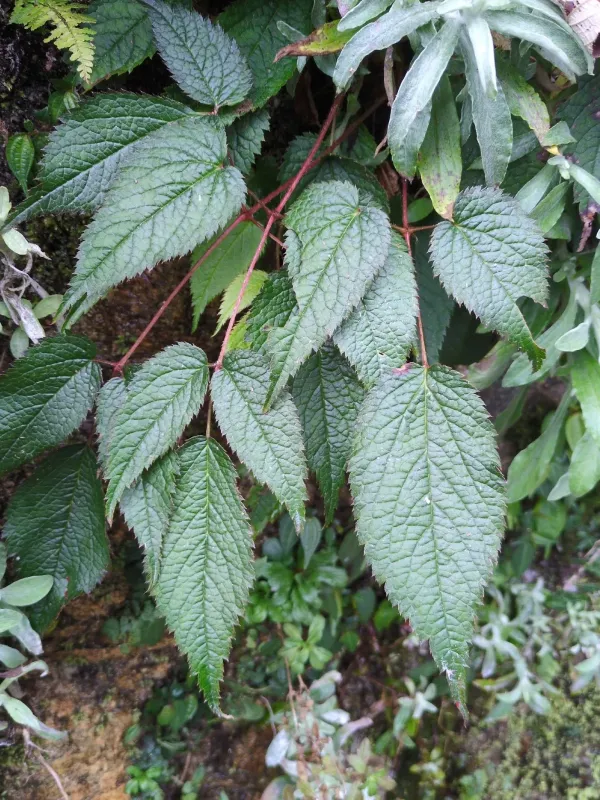
The plant is characterized by its significant stature, frequently reaching heights of 1.5 meters. It features large, lush, compound leaves and produces tall, plume-like inflorescences composed of small, creamy-white flowers. These plumes rise elegantly above the foliage during the mid-to-late summer season.
Cultivation requirements focus heavily on moisture availability. This species thrives in fertile, humus-rich soils that remain consistently damp. While it can tolerate various soil textures, it strictly requires a shaded or semi-shaded location, as intense direct sunlight can cause leaf scorch and rapid dehydration.
Cultural practices include regular irrigation, especially during dry spells, as the plant possesses a shallow root system prone to moisture stress. Applying a generous layer of organic mulch around the base is an essential technique to maintain soil temperature and moisture levels, mimicking the natural conditions of a forest floor.
In landscaping, Astilbe rivularis is highly valued for its structural presence in water-adjacent plantings. It is frequently used in large-scale garden beds, riparian buffer zones, and shaded landscapes where its size and texture can be fully appreciated as a centerpiece or background element.
Main diseases and pests
The primary pests affecting this species include nematodes, which may compromise the root system, and spittlebugs that cluster on stems and leaves. Maintaining plant vigor through proper site selection and healthy soil management is the first line of defense against pest infestations.
Diseases such as root rot and leaf spot are common in poorly drained areas or locations with high humidity and stagnant air. Management involves ensuring adequate drainage, providing sufficient spacing to promote air circulation, and applying appropriate fungicidal treatments if the disease pressure becomes significant.