
Goat's beard astilbe
Astilbe biternata
Description
Growing requirements
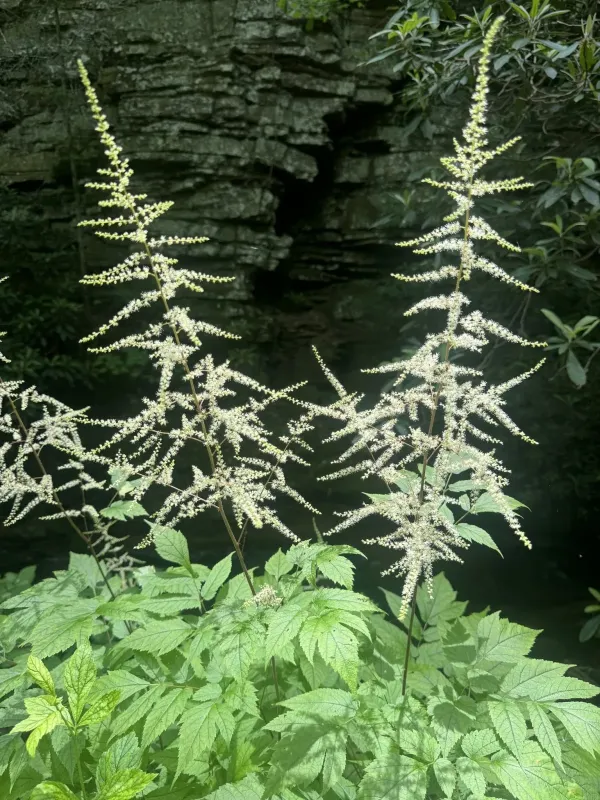
Astilbe biternata, commonly known as the goat's beard astilbe, is a robust herbaceous perennial belonging to the Saxifragaceae family. This species is notably larger than most garden varieties, often reaching impressive heights, making it a spectacular architectural plant for spacious garden settings.
Native to the southeastern United States, this plant thrives in woodland habitats. Its natural adaptation to moist, shaded areas dictates its cultivation needs: it requires protection from harsh, direct sunlight, which can easily scorch its delicate, compound leaves and compromise its health.
For optimal growth, the species demands soil rich in organic matter that maintains consistent moisture without becoming waterlogged. Regular irrigation is essential, especially during the peak of summer, to prevent the foliage from browning and to ensure the plant reaches its full ornamental potential.
The plant is highly resilient in temperate climates, demonstrating excellent winter hardiness. In practical landscaping, it serves as a foundational plant for shade borders or as a dramatic feature near water features where the microclimate naturally supports its high moisture requirements.
Maintenance involves routine deadheading of spent blooms and annual mulching to conserve moisture and regulate soil temperature. These simple efforts ensure the plant remains vigorous and continues to produce its characteristic creamy-white, plume-like inflorescences year after year.
Main diseases and pests
Major pests affecting Astilbe biternata include nematodes, which can severely damage the root system, leading to stunted growth. Frequent monitoring and ensuring healthy soil conditions are the most effective ways to manage potential pest infestations in the garden.
Root rot remains the most common disease, usually triggered by poor drainage or excessive soil moisture levels during dormant periods. Proper soil preparation with adequate organic amendments is the key defense strategy to prevent these issues and maintain the long-term vitality of the perennials.