
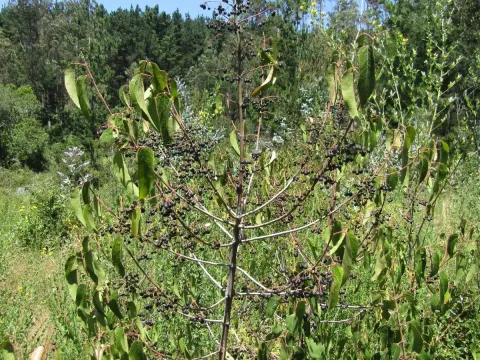
Aristotelia
Aristotelia L'Hér.
Propagation of Aristotelia, most notably Aristotelia chilensis, is typically achieved through seeds or stem cuttings. Seeds require a period of cold stratification to break dormancy and ensure uniform germination in a controlled environment.
What the section contains

Aristotelia
Stem cuttings represent the most reliable method for preserving desirable cultivar traits. Semi-hardwood cuttings are taken during the growing season and placed in a moist, well-draining rooting medium under mist or high-humidity conditions.
Transplanting into the field should occur after the final spring frost. Young plants require consistent care to establish their root systems before the onset of extreme seasonal temperatures.
Aristotelia species are dioecious, meaning individual plants are either male or female. Growers must ensure a sufficient ratio of male to female plants in the plantation to facilitate effective wind or insect pollination.
Adequate spacing is crucial to allow for mature canopy development. Planting distances of 1.5 to 2.5 meters apart are recommended to promote good airflow and minimize the spread of moisture-related diseases.
Aristotelia belongs to the Elaeocarpaceae family. It is native to the temperate forests of Chile and Argentina, where it thrives in cool, humid climates with protection from harsh, drying winds.
The plant requires deep, fertile soils that are rich in organic matter. A slightly acidic to neutral pH is preferred, and the soil must be well-drained to prevent root zone suffocation and fungal outbreaks.
While tolerant of partial shade, Aristotelia reaches its peak production in sunny positions. Adequate moisture is critical throughout the growing season, necessitating the use of irrigation in dry summer periods.
The plant is not fully frost-hardy and requires protection in colder climates. In regions prone to winter freezing, mulching around the root system and providing windbreaks can help sustain plant health.
Nutrient management is essential for long-term productivity. Periodic application of balanced organic fertilizers, combined with regular pruning, ensures the bush maintains a strong, healthy structure.
Yield potential in Aristotelia is dependent on the management of plant health and the age of the crop. Productive yields typically begin 3 to 4 years after the initial field planting.
The fruit, commonly known as maqui berries, are small, dark drupes that possess high antioxidant concentrations. These berries are highly valued in the global market for their health-promoting properties.
Pruning is a primary agronomic tool to sustain yields. By removing non-productive or old wood, growers stimulate the growth of new shoots, which are necessary for high-quality fruit production in subsequent cycles.
Harvesting is performed throughout the ripening period as berries achieve a deep, near-black color. Because the fruit is delicate, careful handling is necessary to maintain the shelf life of the harvested product.
Post-harvest processing involves cleaning, sorting, and either fresh-market distribution or conversion into shelf-stable forms such as freeze-dried powders, extracts, or juices for the superfruit industry.
Fungal pathogens are the most significant threat, particularly in high-humidity or poorly ventilated conditions. Leaf spots and crown rot can develop if air circulation is obstructed by excessive canopy density.
Pests like aphids and spider mites can attack new growth. Integrated pest management (IPM) strategies, including biological controls or targeted sprays, are recommended to maintain plant vitality during peak infestations.
Root health is sensitive to waterlogging. Poorly maintained irrigation systems can lead to root rot, which significantly limits the plant's ability to take up nutrients and water, eventually leading to decline.
Winter injury can also predispose the plants to opportunistic pathogens. Proper autumn maintenance, including reducing nitrogen input and ensuring plants are well-watered before dormancy, helps in winter preparation.
Bird damage is a persistent problem during the fruit ripening stage. The use of agricultural netting is the most effective method for excluding birds and ensuring the maximum possible harvest yield.
Harvesting typically occurs in late summer or early autumn. Given the staggered ripening pattern of the berries, multiple passes through the plantation may be required to collect all mature fruits.
Manual harvesting is the industry standard to ensure only fully ripe berries are collected. Using snips to remove entire fruiting clusters reduces handling stress and minimizes physical injury to the fruit skin.
Once harvested, berries must be protected from direct sunlight and heat. Rapid cooling or immediate processing is necessary to prevent fermentation and preserve the integrity of the bioactive compounds.
Sanitation practices following harvest, such as removing fallen debris and thinning out weak branches, are vital for disease control. A clean plantation environment reduces inoculum levels for the next growing season.
Long-term storage of the product is usually achieved through advanced drying technologies. Freeze-drying is preferred to retain the nutritional profile and color, meeting the high standards of the international market.