
Ardisia crispa
Ardisia crispa (Thunb.) A. DC.
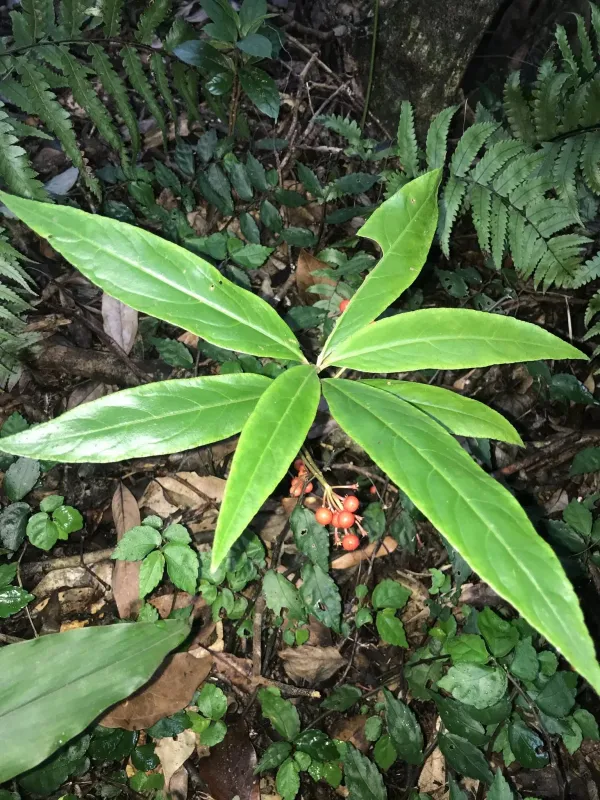
Description
Growing requirements
Ardisia crispa is a woody evergreen shrub belonging to the Primulaceae family. It originates from the subtropical and tropical forests of East and Southeast Asia, where it typically grows as an understory plant in humid environments.
This species thrives in bright, indirect light. Exposure to direct midday sun is harmful and can cause severe leaf scorch. Providing a stable light environment is critical for the plant to maintain its characteristic dense foliage and vibrant red berries.
Temperature requirements involve a warm growing season between 18–24 degrees Celsius and a cooler dormant period during winter. Keeping the ambient temperature between 12–15 degrees Celsius in winter promotes successful flower bud formation for the next season.
The soil should be fertile, well-draining, and slightly acidic. A mix consisting of peat moss, pine bark, and perlite provides the necessary aeration and moisture retention that the root system requires to avoid decay.
Economically, the plant is primarily cultivated for its aesthetic value in horticulture. It is highly sought after as a decorative indoor plant, especially during winter months when its decorative, persistent red berries are most visible.
Main diseases and pests
Scale insects are among the most common pests found on Ardisia crispa. They appear as small brown bumps on stems and leaves, extracting plant sap and weakening the structure of the shrub over time.
Mealybugs represent another significant threat, typically congregating in leaf axils. They produce a sticky substance known as honeydew, which can attract sooty mold, further damaging the aesthetic and health of the plant.
Spider mites can rapidly infest the plant if the air becomes too dry. Symptoms include mottled or yellowing leaves and the presence of fine webbing, which necessitates immediate isolation and treatment of the affected specimen.
Root rot, caused by fungal pathogens such as Pythium or Phytophthora, is almost always a result of overwatering or inadequate soil drainage. This condition is difficult to reverse, making prevention through controlled watering essential.
Control strategies involve a combination of manual removal of pests, improved environmental management (humidity and ventilation), and the judicious use of systemic pesticides or horticultural oils to ensure long-term plant health.