
Anthorrhiza chrysacantha
Anthorrhiza chrysacantha
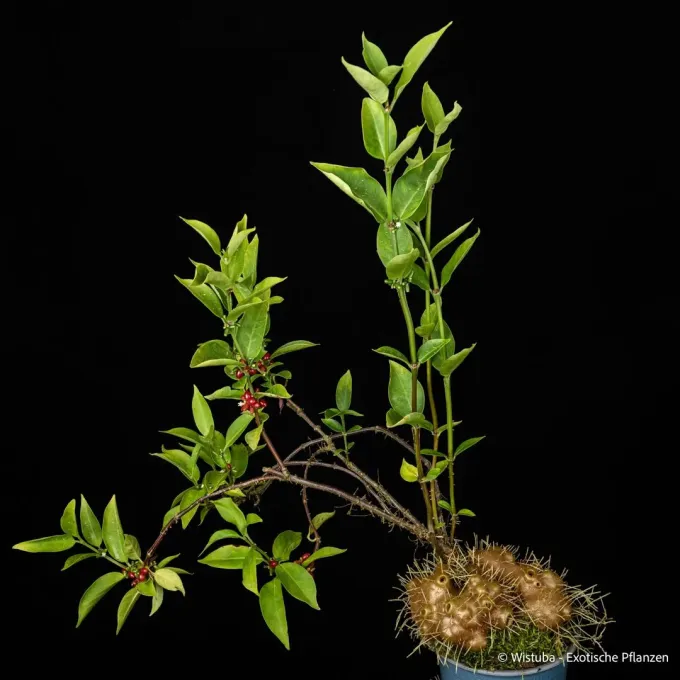
Description
Growing requirements
Anthorrhiza chrysacantha is a rare and fascinating member of the Rubiaceae family, originating from the rainforests of New Guinea. As a specialized myrmecophyte, it has evolved a swollen woody base (caudex) that serves as a habitat for symbiotic ants in its natural environment.
Successful cultivation of this species requires strict adherence to tropical environmental parameters. The plant thrives in high-humidity environments, ideally between 70% and 85%, and requires temperatures maintained consistently between 22°C and 28°C to mimic its native habitat.
The potting medium must be exceptionally well-draining, mirroring the conditions of tree branches where it naturally anchors. A professional-grade mixture of pine bark, perlite, charcoal, and a small portion of peat or sphagnum moss is recommended for optimal root aeration.
Light intensity is another critical factor; the plant performs best under bright, indirect light. Direct tropical sunlight is detrimental and will cause severe scorched spots on the caudex, significantly diminishing the plant’s ornamental and biological value.
Irrigation should be performed with caution. The substrate must be kept consistently slightly damp but never waterlogged. Since Anthorrhiza is an epiphyte, its roots are highly prone to suffocation and rot if the medium remains saturated for extended periods.
Main diseases and pests
Fungal pathogens are the most common threats to the health of Anthorrhiza chrysacantha, usually appearing as a direct consequence of overwatering or inadequate air circulation around the root zone and caudex.
Pests such as spider mites and mealybugs can pose a significant threat, especially in environments where humidity levels fluctuate or drop significantly. These pests target new growth, weakening the plant's overall structural integrity.
To prevent disease outbreaks, it is essential to maintain good air movement around the plant and ensure that no water pools in the crevices of the caudex or leaf axils, which could lead to bacterial or fungal colonization.
Regular sanitation of the growing area and immediate isolation of any symptomatic plants are the best defense mechanisms against the spread of pests and diseases in a greenhouse or collection setting.
Chemical treatments should be approached with caution due to the plant's potential sensitivity. It is recommended to use diluted systemic insecticides or organic oils only after confirming that cultural conditions (water and light) are already optimized.