
Anthorrhiza areolata
Anthorrhiza areolata
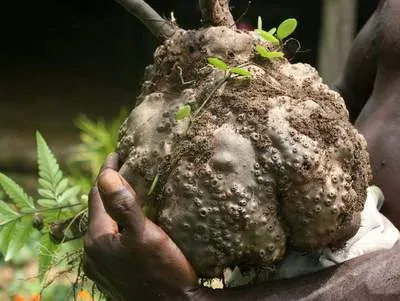
Description
Growing requirements
Anthorrhiza areolata is a fascinating species belonging to the Rubiaceae family, classified as a myrmecophytic epiphyte. Its natural habitat is restricted to the tropical rainforests of New Guinea, where it thrives in the canopy layer, attached to tree trunks and branches.
The plant is biologically distinguished by its swollen caudex, which serves as a highly specialized organ. Inside this caudex, the plant develops an intricate network of galleries and chambers that provide a permanent, protective nesting site for various ant colonies.
This symbiotic relationship is essential for the plant's survival. The ants deposit organic debris within the chambers, which the plant then absorbs as nutrients through specialized internal structures. In return, the ants protect the host plant from herbivores and environmental stresses.
Cultivating this species requires strict adherence to its native environmental parameters. This includes a high-humidity atmosphere, moderate indirect light, and a specialized epiphytic medium such as orchid bark, charcoal, and moss to ensure optimal aeration for the roots.
In terms of хозяйственное (economic) utility, Anthorrhiza areolata is primarily recognized as a specimen of high botanical interest. While it is not a traditional food or fiber crop, its unique adaptations make it a valuable asset for botanical research, evolutionary biology studies, and specialized plant conservation programs.