
Anthorrhiza camilla
Anthorrhiza camilla
Description
Growing requirements
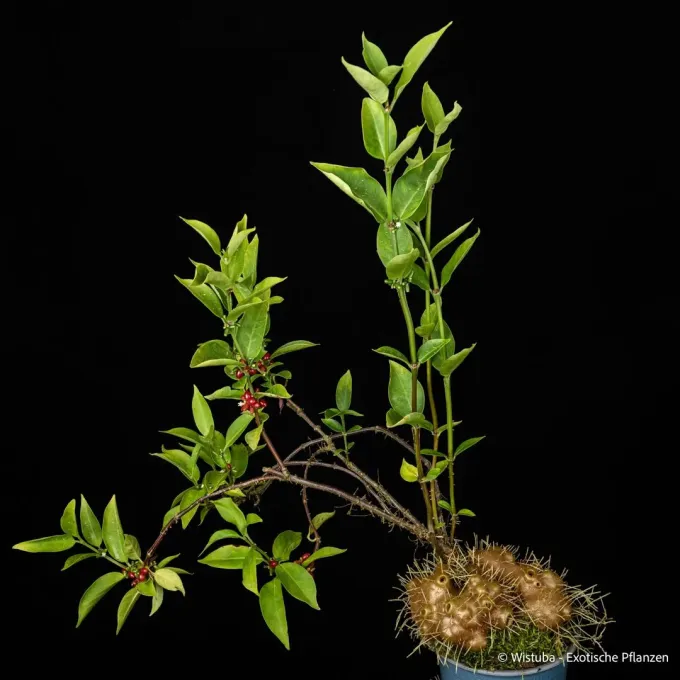
Anthorrhiza camilla is a fascinating species belonging to the Rubiaceae family, widely known for its myrmecophytic nature. Native to the tropical forests of Papua New Guinea, this plant has evolved as an epiphyte, colonizing trees to capture moisture and nutrients from the canopy.
The botanical highlight of this species is its swollen, tuberous stem known as a caudex. Internally, the caudex is hollow, providing a specialized environment that serves as a nesting site for ants, which in turn protect the plant and contribute to its nutrient absorption process.
Cultivation of this species requires strict adherence to tropical environmental parameters. A consistent temperature range between 22 and 28 degrees Celsius is necessary, while high humidity levels are essential to prevent leaf desiccation and promote healthy growth.
A specialized, well-draining epiphytic substrate is mandatory. A mixture consisting of pine bark, charcoal, coconut fiber, and a small portion of sphagnum moss creates the optimal structure that mimics the natural environment of this plant and facilitates root aeration.
Regarding light, Anthorrhiza camilla requires bright, filtered light. Direct sun exposure must be strictly avoided, as it can cause significant damage to the plant's delicate leaf tissue and potentially overheat the caudex, leading to irreversible internal stress.
Main diseases and pests
The most significant threat to Anthorrhiza camilla in a controlled environment is root and caudex rot. This is almost exclusively caused by overwatering or poor drainage, which creates an anaerobic environment that quickly leads to the decay of the plant's main structural component.
Pests such as mealybugs, spider mites, and scale insects frequently attack this species. They find refuge in the intricate crevices of the caudex and the undersides of the leaves, making detection and eradication difficult once an infestation is established.
Effective management includes maintaining optimal airflow to prevent moisture accumulation. Utilizing small fans can help keep the foliage dry and reduce the risk of fungal pathogens taking hold in the plant's dense crown or hidden cavities.
In the event of an infestation, biological control methods are often preferred over heavy synthetic pesticides. Neem oil or insecticidal soaps can be effective if applied early and consistently, ensuring that all crevices of the plant are thoroughly covered.
Quarantine is essential when introducing new plants into a collection containing Anthorrhiza camilla. Ensuring that all new additions are pest-free will prevent the rapid spread of infestations that could be devastating to this slow-growing and specialized species.