
Anthocleista schweinfurthii
Anthocleista schweinfurthii
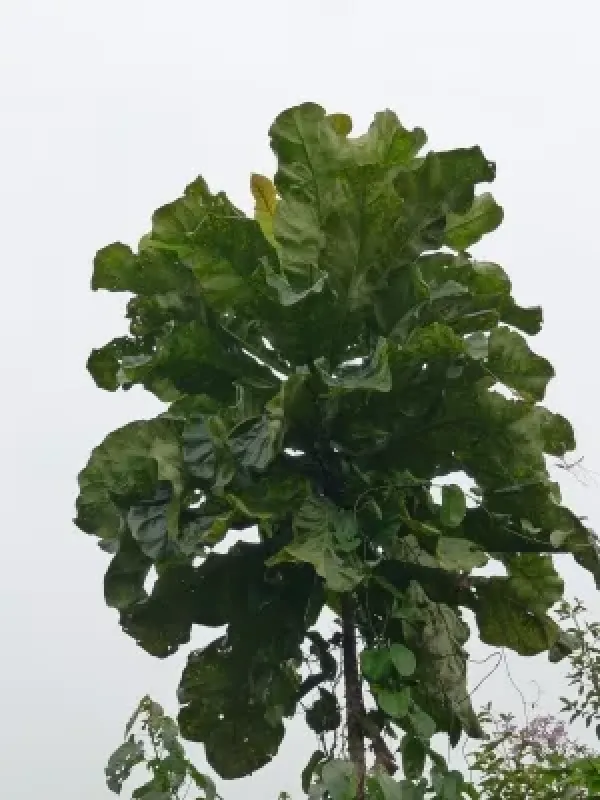
Description
Sowing dates
Propagation of Anthocleista schweinfurthii is primarily carried out through seeds in specialized nursery conditions. Seeds require careful pretreatment and high substrate moisture to ensure consistent germination, which typically occurs over several weeks.
The optimal time for sowing is the beginning of the rainy season, allowing young seedlings to benefit from natural precipitation during their establishment phase. In industrial forestry, container-grown seedlings are preferred for better survival rates.
Planting density is crucial for long-term production; trees should be spaced 3 to 5 meters apart to ensure sufficient canopy development and sunlight access. Early growth requires monitoring to prevent overcrowding.
Seedlings are highly sensitive to direct sunlight during the early developmental stages, necessitating the use of shading nets or natural forest cover. Consistent irrigation is essential until the root system is well-established.
Once seedlings reach a height of 30-50 centimeters, they are ready for transplanting to the main plantation site. Weed control within a half-meter radius is necessary during the first two years to prevent resource competition.
Growing requirements
Anthocleista schweinfurthii belongs to the Gentianaceae family and is native to the tropical forests of Africa. It thrives in regions with high annual rainfall, ideally exceeding 1500 mm, and maintains stable environmental conditions.
The species prefers deep, fertile, and well-drained soils rich in organic matter. Avoid planting in waterlogged areas, as stagnant water can severely impede root growth and trigger decay processes in the timber.
As a light-demanding, fast-growing species, it requires significant solar exposure to develop a straight and strong trunk. In deep shade, growth rates drop significantly and the tree may develop irregular branching.
Temperatures should consistently stay between 20 and 30 degrees Celsius. The plant does not tolerate frost or prolonged drought periods, which restricts its cultivation range to equatorial and tropical zones.
Soil pH levels should be slightly acidic to neutral for optimal nutrient uptake. Regular maintenance of the plantation, including clearing invasive undergrowth, is vital for high-quality wood production.
Yield
The primary economic value of Anthocleista schweinfurthii lies in its exceptionally fast biomass accumulation, making it a highly attractive species for plantation forestry. It reaches harvestable size much faster than many traditional timber trees.
Yields depend significantly on silvicultural practices, with annual timber increments reaching 15-20 cubic meters per hectare in well-managed plantations. This makes the species sustainable for rapid forest resource recovery.
Beyond timber, the bark and leaves serve as valuable medicinal raw materials, often harvested for pharmaceutical applications. Sustainable harvesting practices are essential to ensure the longevity of the trees.
Biomass production can be improved through systematic pruning, which promotes straight trunk development and reduces knot formation. Thinnings can provide secondary wood products suitable for fuel or pulp industries.
Overall economic yield is proportional to the level of care; consistent maintenance and proper site selection enable high productivity throughout the tree's development cycle.
Main diseases and pests
The most common threats during the juvenile phase include beetle infestations that damage the bark and cambium layers. Regular plantation monitoring is necessary to identify and treat localized pest outbreaks early.
Fungal diseases are a significant risk, particularly in areas with poor drainage or high ambient humidity. Maintaining proper spacing ensures better air circulation, which helps reduce the prevalence of these infections.
Competition from aggressive climbing vines can lead to trunk deformation and stunted growth. Mechanical clearing of the surrounding vegetation is a standard procedure in successful agroforestry management.
Defoliating insects can significantly impact growth energy during mass population outbreaks. Utilizing bio-based control measures is recommended to manage these pests without harming the local ecosystem.
Preventative health management involves the selective removal of weak or diseased specimens, ensuring that pests do not spread throughout the entire plantation block.
Harvesting
Technical maturity for Anthocleista schweinfurthii typically occurs between 15 and 25 years of age. Decisions regarding harvest timing are based on specific timber size requirements and market demand for lightweight wood.
Harvesting is ideally conducted during the dry season to facilitate easier transport of logs and to prevent fungal staining of the wood. Professional logging equipment should be used to minimize soil compaction and damage.
Primary processing involves debarking and cross-cutting the logs into assortments suitable for carpentry and furniture manufacturing. The wood is prized for its ease of machining and relatively low density.
For medicinal purposes, bark harvesting should be done in a rotational, non-destructive manner to allow for regeneration. This ensures that the resource remains productive over several decades.
Post-harvest management requires soil restoration efforts, including organic fertilization and preparing the land for the next generation of planting to ensure continuous production and soil fertility.