
Anthocleista procera
Anthocleista procera
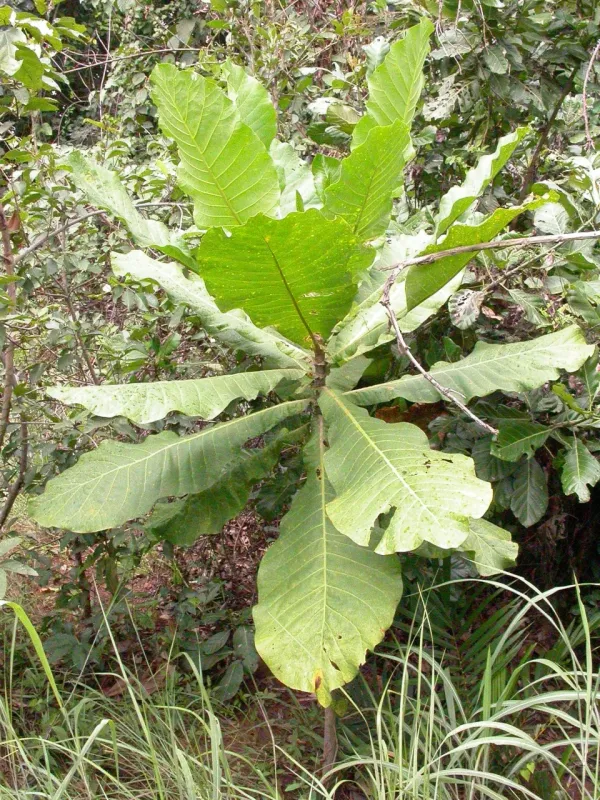
Description
Growing requirements
Anthocleista procera belongs to the Gentianaceae family. It is a fast-growing tropical tree species that naturally occurs in the humid forests of West and Central Africa, where it often forms a significant part of the forest canopy structure.
The tree thrives in environments with high annual rainfall and consistent temperatures throughout the year. It requires deep, well-drained, and nutrient-rich soils to support its rapid growth rate, avoiding sites prone to prolonged waterlogging.
In silviculture, this tree is valued for its rapid biomass accumulation, making it an excellent candidate for forest restoration projects. It demonstrates a strong ability to colonize secondary forests and disturbed sites within its native tropical range.
The species is botanically distinguished by its large, leathery leaves and unique inflorescence structures. Its wood is locally harvested for light construction and various carpentry tasks, while extracts from its bark and leaves are utilized in traditional medical practices.
Successful cultivation requires early-stage weed management to ensure seedlings establish without competition. Being a light-demanding species, it achieves its maximum growth potential when planted in clearings or managed, open-canopy forest stands.
Main diseases and pests
The primary threats to Anthocleista procera include root rot and other fungal infections, which are commonly triggered by poor soil drainage in humid tropical settings. Leaf spot diseases may also occur if the canopy remains constantly damp for extended periods.
Pest damage, such as infestations by stem borers or defoliating caterpillars, can severely hinder the health of young saplings. Proactive orchard management, including regular health inspections and maintaining appropriate planting density, is essential for minimizing potential losses.