
Andrachne decaisnei
Andrachne decaisnei
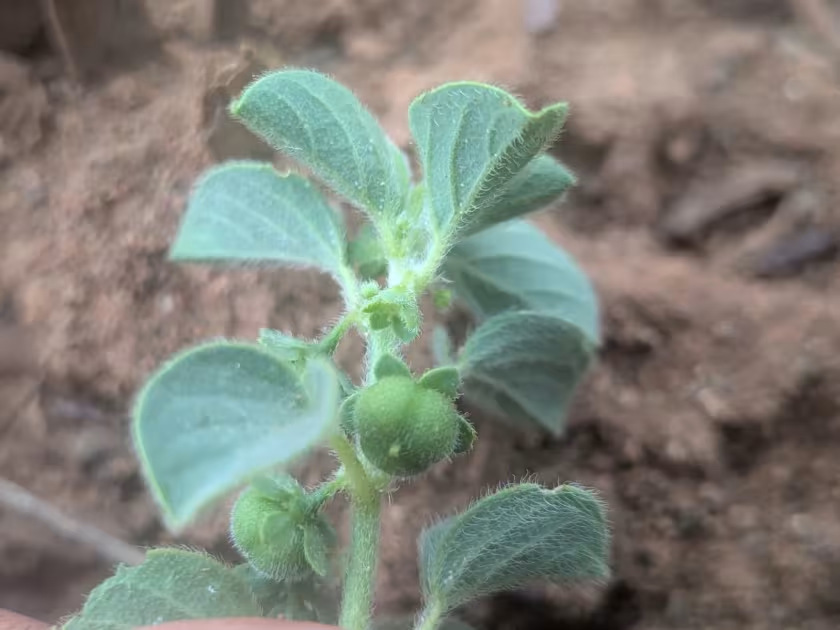
Description
Sowing dates
The sowing of Andrachne decaisnei is primarily conducted via seeds during the spring season, once the soil has warmed up to stable temperatures. The seeds require preliminary stratification to enhance germination vigor, as they are protected by a dense, robust coat.
Seeds should be planted at a depth of no more than 1–2 centimeters in a well-prepared, loose substrate. An optimal planting pattern involves row spacing of 40–50 centimeters to ensure adequate sunlight exposure for the developing young plants.
Germination is often uneven, necessitating consistent moisture in the upper soil layer until the first pair of true leaves is formed. Once seedlings emerge, thinning is performed to achieve ideal plant spacing across the seedbed.
In the early growth phase, the use of plastic covers may be beneficial to accelerate vegetation. This method protects delicate seedlings from unexpected night frosts and helps establish a favorable microclimate for development.
The plant exhibits moderate growth speed during its first year, focusing primarily on establishing a strong root system. Timely soil cultivation is crucial to prevent surface crusting and to maintain essential root aeration for healthy development.
Growing requirements
Andrachne decaisnei belongs to the Euphorbiaceae family and is a xerophytic subshrub, well-adapted to arid environments. It prefers open, sun-drenched locations with minimal shading throughout the day for optimal metabolic function.
The crop has low soil fertility requirements, performing exceptionally well in stony, sandy, or loamy soils with neutral to slightly alkaline pH levels. Water stagnation is highly detrimental and can lead to immediate root system failure.
The temperature regime should reflect a moderately hot climate, as the plant possesses high heat resistance and the capacity to survive extended periods of drought. Excessive humidity significantly increases the risk of root rot diseases.
Proper soil aeration is essential for this subshrub, which can be achieved by incorporating sand or gravel when preparing the planting site. Over-application of nitrogen fertilizers is discouraged, as it reduces the natural hardiness of the plants.
While adapted to soils low in humus, the plant responds favorably to minimal doses of potassium-phosphorus fertilizers during active vegetative growth. This practice promotes better shoot hardening before the onset of the dormant winter season.
Yield
The yield of green matter or medicinal raw material from Andrachne decaisnei is directly correlated with lighting conditions and overall moisture availability. Given its biological constraints, productivity per unit area remains relatively low compared to intensive crops.
The primary economic value lies in the aerial parts, which are rich in biologically active compounds. Harvesting is typically carried out during the peak flowering phase, when the concentration of these beneficial substances reaches its maximum level.
To maximize dry matter output, regular weeding is recommended, as weeds compete with the crop for limited water and nutrient resources. With appropriate maintenance, the plant can provide stable annual growth for 3–5 years without requiring bed renovation.
The biological productivity of this species is naturally limited by its adaptation to extreme environments, requiring a cautious approach to production intensification. Excessive irrigation may leach out nutrients and diminish the quality of the harvested medicinal material.
Yield assessment should be based on the dried mass of shoots collected in ecologically clean conditions. If dried correctly, the raw material retains its chemical properties for a long duration when stored in low-temperature environments.
Main diseases and pests
Typical diseases for this crop in high-humidity conditions include various types of rot caused by pathogenic fungi. Infection of the root crown typically leads to rapid, total plant loss in a very short period of time.
Pests that affect Euphorbiaceae may include specific sap-sucking insects like aphids or spider mites, especially in greenhouse environments or crowded planting zones. Effective pest management requires regular, preventive inspection of the plant population.
To combat fungal diseases, it is essential to maintain a strict irrigation schedule and ensure proper ventilation within the planting rows. Fungicide application should be reserved for extreme cases and strictly adhere to dosages permitted for medicinal herbs.
Pest damage can be minimized by selecting appropriate planting sites that offer natural air circulation. Maintaining the cleanliness of the plot through sanitation is the most effective proactive protective measure available.
Upon identifying disease hotspots, infected plant parts must be removed immediately and destroyed far from the main site. This prevents the spreading of fungal spores to healthy individuals throughout the growing season.
Harvesting
Harvesting Andrachne decaisnei is conducted during dry weather in the second half of the day, once all morning dew has evaporated. This step is critical to prevent spoilage during drying and to ensure the preservation of bioactive compounds.
Sharp garden tools are used to cut the aerial part of the plant at a height of 5–10 centimeters above the soil level. It is vital to avoid damaging the root system, which allows the plant to regenerate growth in subsequent seasons.
The cut material is immediately transported to a drying facility, avoiding prolonged exposure to direct sunlight. The biomass should be spread in a thin layer in a well-ventilated room, protected from any atmospheric precipitation.
The drying process is considered complete when the stems become brittle and snap easily upon bending. Excessive dehydration is not recommended, as it leads to the loss of essential oils and undesirable changes in material color.
After drying, the material is cleaned of foreign impurities and packaged in paper containers. Storage must occur in dry, dark, and cool areas to ensure the long-term shelf life and quality of the final product.