
Andrachne aspera
Andrachne aspera
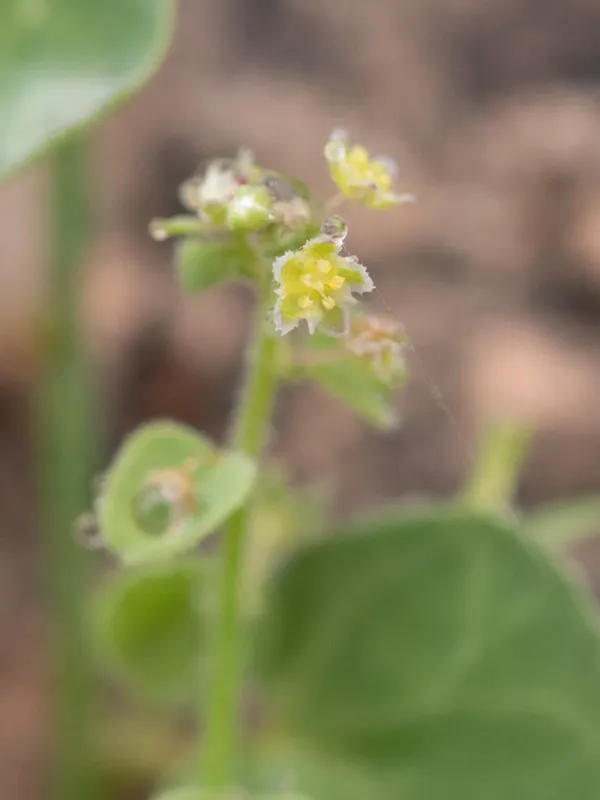
Description
Sowing dates
Andrachne aspera is a typical species of arid zones, so the timing of its natural regeneration and sowing is linked to the onset of stable warmth following seasonal rains. In arid climates, sowing is best performed in late winter or early spring to allow seeds to utilize meltwater for germination.
The optimal soil temperature for germination of this species starts from +15°C. It is important to avoid waterlogging during sowing, as seeds can rot in cold and overly dense soil. During experimental cultivation, it is recommended to sow seeds at a depth of no more than 2-3 centimeters, followed by rolling to ensure good soil contact.
When grown artificially, it should be noted that Andrachne is characterized by a prolonged germination period. Some seeds may remain dormant, so stratification or pre-treatment with growth stimulants can significantly improve the field germination rate of the crop.
The plant demonstrates high adaptability to different sowing dates within the spring season. However, delaying sowing until high air temperatures arrive leads to a sharp decline in germination energy and requires regular watering during the initial stages of plant development.
Sowing density should be calculated based on the intended use: for green mass production, the seeding rate is approximately 10-12 kg per hectare. Using row-cropping allows for better management of inter-row spaces during the first months of the crop's vegetation.
Growing requirements
Andrachne aspera is a perennial subshrub of the Euphorbiaceae family, possessing exceptional resistance to extreme temperatures. The plant is adapted to growing on rocky slopes, cliffs, and open spaces where other crops perish from lack of moisture.
The crop places minimal demands on soil fertility, developing successfully on sandy, loamy, and even saline soils. The plant thrives best in neutral or slightly alkaline soil conditions, provided that there is no prolonged water stagnation.
In its natural habitat, the plant is found in countries of the Middle East and some regions of Asia. It prefers open, sun-drenched areas, as shading leads to stunted shoot development and a decrease in the concentration of secondary metabolites in the aerial parts.
The most important condition for successful cultivation is the presence of good drainage. Andrachne aspera categorically does not tolerate waterlogging of the root system, which can lead to fungal infections and the death of the entire plant within a short period.
For the normal development of the subshrub, the minimal level of rainfall characteristic of semi-deserts is sufficient. Under agronomic conditions, the plant displays high drought resistance, using a deep root system to extract moisture from lower soil horizons.
Yield
The economic use of Andrachne aspera is most often associated with its value as pasture forage in arid regions. During periods when grass dries out, this crop retains green shoots, remaining a source of nutrients for small ruminants.
Green mass yield is directly dependent on the amount of moisture available during the active growth period. In conditions of moderate moisture, the plant is capable of providing multiple cuttings per season, although in natural conditions, industrial exploitation is most often limited to grazing.
The biochemical composition of the aerial parts of Andrachne includes a range of organic acids, flavonoids, and tannins. Due to high protein and mineral content, the crop is of potential interest as a component for creating sustainable artificial pastures.
Although data on precise yield per hectare are limited, observations show that applying small doses of nitrogen fertilizers increases the overall productivity of the crop by 15-20% without losing drought resistance.
Beyond its forage value, Andrachne is considered a promising plant for stabilizing eroded soils. Its powerful root system effectively holds soil on slopes, preventing the washing away of the fertile topsoil during heavy rains.
Main diseases and pests
The primary threats to Andrachne aspera are root rots, which arise from poor agricultural management, particularly excessive watering or high groundwater levels. Water stagnation triggers the growth of pathogenic fungi that destroy the plant's root collar.
Among pests, the greatest damage to the crop is caused by phytophagous insects characteristic of the Euphorbiaceae family. Specifically, these may include various species of aphids that suck juices from young leaves and shoots, weakening the plant and promoting the development of sooty mold.
In dry years, the plant may be infested by spider mites, especially if grown under crowded conditions. Regular inspection of plantings and maintaining optimal distance between bushes allows the risk of infestation to be minimized.
For crop protection on an industrial scale, the use of biological pest control methods is recommended, which is especially important if the product is intended for use as feed for animals sensitive to pesticide residues.
Disease prevention consists of maintaining an optimal water balance and timely weeding. Weed vegetation creates excess humidity in the root zone, which becomes the primary site for the development of infections.
Harvesting
Harvesting Andrachne as a forage crop is performed by mowing during the budding phase, when the concentration of useful substances in the leaves reaches its maximum. This allows for the production of the most nutritious feed, which is readily consumed by livestock.
When harvesting seed material, work begins after the fruits acquire a characteristic brown tint. It is important to collect seeds before mass shattering occurs, as Andrachne has a high degree of self-seeding, which may be undesirable if crop rotation is planned.
The harvesting technique should be gentle, as the plant's shoots can be quite tough. The use of modern mowers with shredders allows for obtaining a fraction convenient for further drying or ensiling in mixtures with other types of feed.
After harvesting, it is crucial to ensure rapid drying of the cut mass in windrows or specialized drying units. In hot climates, this occurs naturally, but prolonged exposure to direct sunlight should be avoided to prevent vitamin degradation.
For long-term storage, baled hay or pellets made from Andrachne must be kept in dry, ventilated areas. Maintaining proper humidity levels prevents molding and the loss of nutritional value, ensuring product quality throughout the winter period.